
Universitas Andalas Strengthens Sustainable Poultry Innovation and Global Food Security through ICPS 2026 under the EQUITY Program
Padang, 15 May 2026
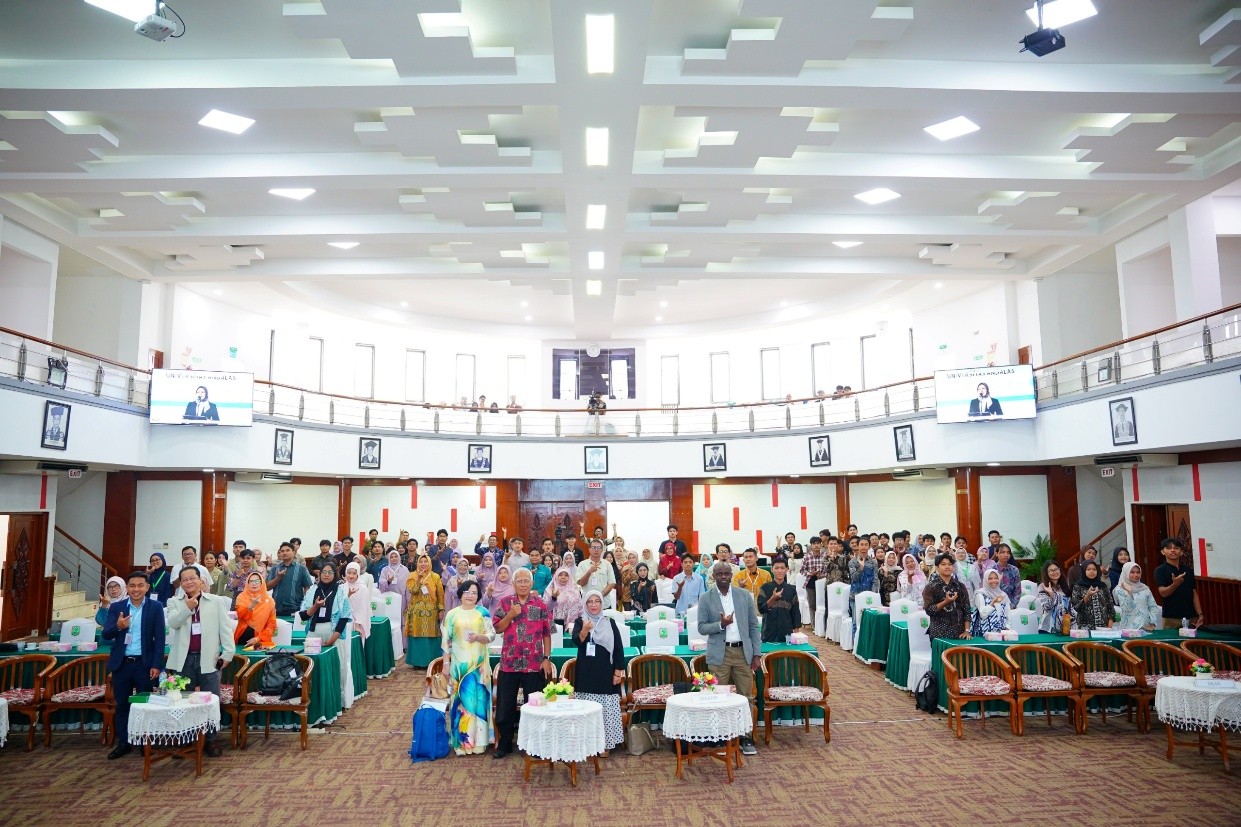
Padang — Universitas Andalas, through the Faculty
of Animal Science, successfully organized the International Conference of
Poultry Sciences (ICPS) 2026 as part of the Enhancing Quality Education for
International University Impacts and Recognition (EQUITY) Program. The
international conference brought together academics, researchers, students,
industry representatives, practitioners, and policymakers to strengthen
scientific collaboration and explore innovative solutions for the future of
sustainable poultry production.
Held on 12–13 May 2026 at the Universitas Andalas Convention Hall in Padang, ICPS 2026 carried the theme “Sustainable Poultry Development and Future Research: Integrating Science, Technology, and Policy for Global Food Security.” The conference was conducted in a hybrid format, combining onsite activities with online participation through Zoom, enabling broader engagement from national and international participants.

The conference addressed the increasingly complex
challenges facing the global poultry sector, including climate change,
production efficiency, animal welfare, food security, food safety,
international trade, and policy development. It also highlighted the importance
of integrating scientific research, technological innovation, and policy to
develop poultry systems that are adaptive, efficient, competitive, and
sustainable.
Particular attention was given to the potential
of local poultry genetic resources in West Sumatra. The region is home to
valuable indigenous poultry resources such as Kokok Balenggek chickens and
several local duck breeds, including Pitalah, Bayang, Kamang, and Sikumbang
Jonti ducks. These genetic resources have important adaptive, economic, and
socio-cultural value and provide considerable opportunities for research in
nutrition, genetics, reproduction, animal health, production management, and
value-added product development.
ICPS 2026 involved participants, presenters, and
speakers from 10 countries: Indonesia, Germany, Pakistan, Vietnam, Cambodia,
Malaysia, India, Yemen, Kenya, and Iraq. The conference featured 80 scientific
contributions, consisting of 43 onsite presentations and 37 online
presentations, while approximately 300 onsite participants attended the event,
including lecturers, students, researchers, and industry partners.
The international scientific program featured
speakers from academic institutions and industry, including Prof. Dr. Ir. James
Hellyward from Universitas Andalas; Dr. Temitope Alex Aloba from Dr. Eckel
Animal Nutrition GmbH, Germany; Faizan Rashid from Poulta Inc., Pakistan; Prof.
Dr. Nguyen Thi Kim Dong from Tay Do University, Vietnam; Dr. Phem Menghak from
the Royal University of Agriculture, Cambodia; and Prof. Dr. Ir. Firda Arlina
from Universitas Andalas.
Scientific discussions covered a wide range of
topics, including poultry nutrition, genetics and breeding, animal health, feed
technology, animal welfare, food safety, digital technology, precision poultry
farming, poultry economics, supply chains, livestock policy, and sustainable development
of local poultry resources.
The implementation of ICPS 2026 also demonstrated
strong collaboration between academic institutions, government research
organizations, and industry. Participating institutions included Dr. Eckel
Animal Nutrition GmbH & Co. KG in Germany, Poulta Inc. in Pakistan, Tay Do
University in Vietnam, the Malaysian Agricultural Research and Development
Institute, institutions from Yemen, Kenya, Iraq, and India, the National
Research and Innovation Agency of Indonesia (BRIN), as well as numerous
Indonesian universities.
Prof. Henmaidi, S.T., M.Eng.Sc., Ph.D., Vice
Rector IV of Universitas Andalas and Person in Charge of the EQUITY Program,
participated in the opening of the conference together with the Faculty
leadership, organizing committee, and invited speakers.
Prof. Henmaidi emphasized that the conference
represents an important example of how international academic collaboration can
be connected directly with sustainable development and real-world challenges.
“Through the EQUITY Program, Universitas Andalas
aims to ensure that internationalization generates tangible academic and
societal impact. ICPS 2026 connects research, technology, industry, and
international partnerships with one of the world’s fundamental challenges: sustainable
food security. For the next EQUITY period, international activities should
increasingly produce measurable follow-up outcomes, including collaborative
research, international publications, academic mobility, innovation, and
partnerships that continue beyond the activity itself.”
He added that strengthening international
networks should be accompanied by stronger mechanisms for translating academic
research into solutions that can benefit communities, industries, and
policymakers.
Dr. Eng. Muhammad Makky, Chair of the EQUITY
Program at Universitas Andalas, highlighted the importance of viewing
international conferences as starting points for long-term collaboration rather
than as stand-alone activities.
“The next phase of EQUITY should focus even more
strongly on sustainability of impact. International conferences such as ICPS
should become platforms for creating new research consortia, joint
publications, academic exchanges, innovation projects, and partnerships with
industry and government. We need to be able to follow each activity beyond the
event itself and demonstrate what new collaborations, knowledge, technologies,
and societal benefits are generated.”
Makky noted that the subject of ICPS is strongly aligned with several Sustainable Development Goals. Research and innovation in poultry production can contribute directly to SDG 2 on Zero Hunger by strengthening food and nutrition security, while food safety and animal health research support SDG 3 on Good Health and Well-being. International scientific exchange and researcher development reinforce SDG 4 on Quality Education, while technological innovation and collaboration with industry contribute to SDG 9 on Industry, Innovation and Infrastructure.

Sustainable feed development, efficient use of agricultural
by-products, waste valorization, and improved production efficiency can also
contribute to SDG 12 on Responsible Consumption and Production. Research
addressing heat stress, climate-resilient poultry systems, and resource
efficiency supports SDG 13 on Climate Action, while international research and
industry networks reinforce SDG 17 on Partnerships for the Goals.
Meanwhile, Dr. Ir. Kusnadidi Subekti, S.Pt.,
M.P., IPM, Chair of the ICPS 2026 Organizing Committee, highlighted the
importance of maintaining the scientific networks established during the
conference. The final activity report identifies Kusnadidi Subekti as the Chair
of the Organizing Committee.
“ICPS 2026 demonstrated that poultry science
requires increasingly interdisciplinary and international collaboration. The
participation of researchers, universities, research institutions, and industry
from different countries created valuable opportunities to exchange knowledge
and identify common research interests. The next challenge is to ensure that
these discussions are followed by concrete collaboration in research,
scientific publications, academic exchange, and innovation.”
He added that the conference also provided an
important opportunity to bring local poultry resources into international
scientific discussions, allowing indigenous genetic resources from West Sumatra
to be explored through modern approaches in genetics, nutrition, reproduction,
animal health, and production technology.
The conference’s parallel sessions demonstrated the
breadth of contemporary poultry research. Scientific contributions included
studies on natural and alternative feed additives, fermented agricultural
by-products, poultry genetics, local chicken and duck breeds, food safety,
disease and biosecurity, precision nutrition, supply-chain resilience, climate
adaptation, and sustainable poultry production. The sessions also included
research specifically related to Kokok Balenggek chickens and other Indonesian
poultry genetic resources.
ICPS 2026 also created opportunities for
international research and institutional cooperation. The activity report notes
that the conference successfully strengthened academic networks and provided
opportunities for future collaboration in research, international publications,
academic exchange, and poultry innovation.
Looking toward a future EQUITY period, several
areas can be further strengthened. First, international conferences could
include measurable SDG indicators and follow-up targets from the proposal
stage. Rather than evaluating activities primarily through participation
figures, future programs could also track joint publications, new international
research proposals, visiting researchers, student mobility, industry
collaborations, technologies developed, policy recommendations, and
partnerships that remain active six to twelve months after the activity.
Second, the involvement of industry and
government could be expanded so that research findings are more systematically
translated into practical solutions. In the context of poultry science, this
could include collaborative development of alternative feeds, animal health
technologies, precision farming systems, local poultry breeding programs,
climate-resilient production models, food safety systems, and technologies for
processing livestock products.
Third, future EQUITY-supported conferences could
strengthen publication management through early selection of publication
partners, structured manuscript mentoring, internal scientific review, and
clear post-conference publication timelines. This would help translate
conference presentations into internationally visible research outputs.
Fourth, greater attention could be given to
research that links scientific innovation with local communities and
smallholder farmers. This would allow international collaboration to contribute
more directly to household income, rural livelihoods, food affordability, local
genetic-resource conservation, and resilient agricultural systems, thereby
broadening the contribution of EQUITY to SDGs 1, 2, 8, 10, 12, and 13.
Through ICPS 2026, Universitas Andalas has
demonstrated how international scientific collaboration can contribute to the
transformation of the poultry sector while supporting food security, research
excellence, innovation, and sustainable development. By strengthening long-term
research partnerships, international publications, technology transfer,
industry engagement, and measurable SDG-oriented impact, future EQUITY
initiatives have the potential to extend these benefits from academic forums
into meaningful solutions for communities, industry, and society.
This activity is funded by the Indonesian
Endowment Fund for Education (LPDP) on behalf of the Indonesian Ministry of
Higher Education, Science and Technology and managed under the EQUITY Program
(Contract No.4304/B3/DT.03.08/2025).