
Universitas Andalas Strengthens Global SDG Collaboration through ICSSD-SEA 2026 under the EQUITY Program
Padang, 16 July 2026
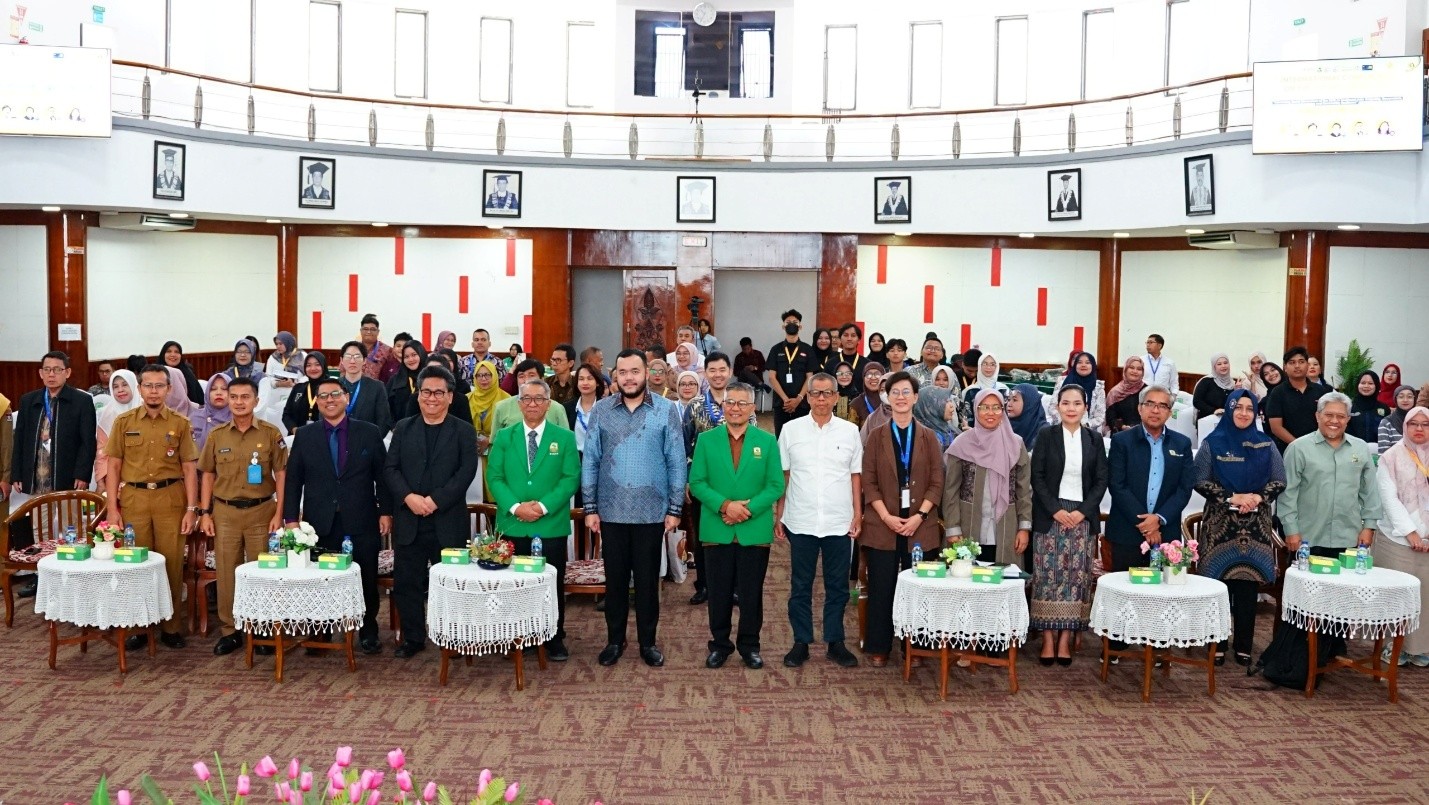
PADANG, INDONESIA — Universitas Andalas (UNAND),
through its Faculty of Social and Political Sciences (FISIP), successfully
organized the International Conference on the Social Dimensions of Sustainable
Development in Southeast Asia (ICSSD-SEA) 2026, an international academic forum
designed to strengthen research collaboration, knowledge exchange, and the
university’s contribution to the Sustainable Development Goals (SDGs).
Held on 14–15 July 2026 at the Universitas
Andalas Convention Hall in Padang, the conference carried the theme “Advancing
Social Dimensions of the SDGs in Southeast Asia: Inequality, Governance, and
Community Resilience.” The event was organized in a hybrid format, enabling
academics, researchers, students, practitioners, and international partners to
participate both onsite and online.
The conference reflected growing academic
interest in the social dimensions of sustainable development. According to the
final activity report, the organizing committee received 262 abstracts from 72
universities and institutions across seven countries, with 211 presenters
ultimately participating in the parallel sessions. The conference provided a
platform for discussing issues ranging from governance and inequality to
climate resilience, digital transformation, gender, sustainable livelihoods,
community empowerment, and public policy.
The conference featured distinguished speakers from leading institutions in Southeast Asia and Australia, including Asst. Prof. Dr. Chantha Thanawattanawong of Ubon Ratchathani University, Thailand; Professor Vedi Hadiz of the University of Melbourne, Australia; Dr. Lamngeune Souliyavong of the National University of Laos; Dr. Mohammad Reevany Bustami of Universiti Sains Malaysia; and Dr. Sofia Trisni of Universitas Andalas. Their presentations explored local governance and community empowerment, inequality and sustainable development, environmental and livelihood challenges, social cohesion, and public diplomacy.

The conference is part of Universitas Andalas’
broader effort to strengthen its international academic presence while
demonstrating how universities can contribute directly to the global
sustainable development agenda. The activity particularly resonates with SDG 4
on Quality Education, SDG 5 on Gender Equality, SDG 10 on Reduced Inequalities,
SDG 11 on Sustainable Cities and Communities, SDG 16 on Peace, Justice and
Strong Institutions, and SDG 17 on Partnerships for the Goals. The activity
report also emphasizes that research, education, and international
collaboration are important dimensions of university contributions measured
through the Times Higher Education Impact Rankings.
Prof. Henmaidi, Vice Rector IV of Universitas
Andalas and Person in Charge of the EQUITY Program, emphasized that activities
such as ICSSD-SEA should create impacts that extend beyond the conference
itself.
“Through the EQUITY Program, Universitas Andalas
is seeking to transform international academic activities into measurable
institutional impact. ICSSD-SEA demonstrates that internationalization can be
directly connected with research quality, global partnerships, knowledge
dissemination, and the Sustainable Development Goals. In the next EQUITY
period, we need to ensure that every activity is designed from the outset with
clear SDG targets, measurable outputs, strong international partnerships, and
sustainable follow-up mechanisms.”
He added that strengthening the connection between
academic activities and institutional performance would be increasingly
important, particularly in enhancing UNAND’s international recognition and
demonstrating the university’s tangible contribution to sustainable
development.
Dr. Eng. Muhammad Makky, Chair of the EQUITY
Program at Universitas Andalas, highlighted the importance of ensuring
continuity after internationally funded activities are completed.
“The success of EQUITY should not be measured
only by the number of events, participants, or international speakers involved.
What is equally important is what happens after the activity: whether new joint
research is initiated, whether publications are produced, whether academic
mobility develops, whether partnerships continue, and whether the knowledge
generated contributes to society. Our next step is to strengthen this
impact-oriented approach so that every EQUITY activity becomes an accelerator
for the internationalization and global visibility of Universitas Andalas.”
According to Makky, future EQUITY initiatives
should increasingly connect international conferences, research collaboration,
mobility programs, publications, and institutional partnerships into a more
integrated ecosystem. Such an approach would particularly strengthen SDG 4 through
international learning and knowledge exchange, SDG 9 through innovation and
research collaboration, and SDG 17 through sustainable global partnerships.
Meanwhile, Maryam Jamilah, S.IP., M.A., Chair of
the ICSSD-SEA 2026 Organizing Committee, described the high level of
participation as an important indication of the conference’s potential for
continued development. The activity report identifies Maryam Jamilah as the
activity’s organizing chair.
“The enthusiasm shown by researchers and
institutions participating in ICSSD-SEA indicates that there is strong demand
for an international forum focusing specifically on the social dimensions of
sustainable development. The challenge for us now is to maintain this momentum
by strengthening international promotion, improving the hybrid conference
system, preparing publication pathways earlier, and expanding institutional
collaboration so that ICSSD-SEA can develop into a sustainable international
academic platform.”
Beyond research dissemination, ICSSD-SEA also
provided opportunities for participants to develop new academic networks,
exchange research experiences, explore collaborative projects, and pursue joint
publications. The organizing committee also awarded Best Presenter recognition
in the parallel sessions. As a post-conference follow-up, the report notes that
publication cooperation was established with the Journal of ASEAN Studies,
identified in the report as a Scopus Q2 journal, while discussions with other
international publishers and journals were continuing.
Looking toward a future EQUITY period, the experience of ICSSD-SEA provides several areas for improvement. International activities could be designed with SDG mapping and measurable impact indicators from the proposal stage, rather than linking activities to the SDGs only after completion. International promotion could also be expanded to achieve broader geographic participation, while publication agreements with reputable journals or proceedings should ideally be secured before the activity begins.

Integrated digital systems for registration,
manuscript submission, scheduling, certification, documentation, and
publication tracking would strengthen efficiency and accessibility,
particularly for hybrid activities. These priorities are consistent with the
activity report’s recommendations to strengthen international promotion,
establish publication partnerships earlier, improve hybrid technical support,
develop integrated conference management, and expand collaboration with
universities, research institutions, government agencies, and international
partners.
Through ICSSD-SEA 2026, Universitas Andalas has
demonstrated that an international conference can serve not only as a venue for
presenting research, but also as a strategic platform for building global academic
networks and advancing sustainable development. With stronger outcome-based
planning, international partnerships, publication strategies, digital
management, and long-term impact monitoring, the next period of EQUITY has the
potential to generate even greater academic, institutional, social, and global
impact.
This activity is funded by the Indonesian
Endowment Fund for Education (LPDP) on behalf of the Indonesian Ministry of
Higher Education, Science and Technology and managed under the EQUITY Program
(Contract No.4304/B3/DT.03.08/2025).