
From West Sumatra’s Rice Fields to International Scholarship: EQUITY Opens New Pathways for UNAND Researchers
Padang, 09 October 2026
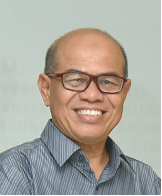
Prof. Rudi
Febriamansyah’s climate-adaptation study demonstrates how locally rooted
research can gain global visibility—and invites more lecturers to prepare their
next EQUITY proposals.
PADANG — A challenge faced by rice
farmers in West Sumatra has become the subject of research accepted by the
international journal Research on World Agricultural Economy. Through support
from the EQUITY Program, Universitas Andalas (UNAND) is highlighting a
practical message for its academic community: research questions emerging close
to home can contribute to international scientific conversations.
The manuscript, “Rice Farming Under
Climate Stress: The Vulnerability and Adaptation Strategies of Farmers in West
Sumatera, Indonesia,” has passed peer review and author revisions and has been
accepted for publication; it should not yet be described as a published
article. The authors are Rudi Febriamansyah, Yuerlita, Raza Ullah, Sugeng
Nugroho, Malik Muhammad Shafi, Dwi Mulyani, Yosti Aprila, and Tegar Mahardhika.
Led by Prof. Ir. Rudi Febriamansyah,
M.Sc., Ph.D., the study examines how rice-growing communities face
climate-related pressures and develop adaptation strategies. Shifts in
rainfall, extreme weather, water availability, and agricultural production
risks can put both harvests and rural livelihoods under strain. By focusing on
the experience of farmers, the work can inform agricultural extension, local
policy, and the design of more climate-resilient farming programs.
The achievement is particularly
relevant to lecturers whose work addresses regional problems in agriculture,
water, food security, social institutions, and rural development. Their local
research contexts need not limit their academic reach. With rigorous methods,
collaboration, and a clear contribution to wider debates, field-based studies
can be positioned for international publication.
Vice Rector IV Prof. Henmaidi has
emphasized the importance of research that combines international academic
quality with tangible value for communities. In this case, the potential next
step is to connect the evidence with local governments, farmer organizations,
and development partners so that findings can inform practical responses to
climate risk.
For EQUITY Chair Dr. Eng. Muhammad
Makky, S.T.P., M.Si., the acceptance illustrates the kind of research
trajectory the program seeks to encourage: relevant questions, strong
collaboration, scientific dissemination, and follow-up activities that can
extend beyond a single manuscript. EQUITY should be viewed as a route to
developing research ambitions—not merely as support for one publication.
The opportunity for other UNAND
lecturers is clear. A promising future EQUITY proposal can begin with an
unresolved field problem, identify a research question with international
relevance, build a capable team, and set out credible outputs and potential
partners. Researchers from different faculties can bring complementary
expertise to challenges such as climate resilience and food security.
As UNAND prepares for subsequent
EQUITY opportunities, lecturers are encouraged to develop research ideas early,
strengthen collaboration, and follow official university announcements for the
applicable themes, eligibility rules, selection process, and deadlines. Prof.
Rudi’s team offers an encouraging example: strong research rooted in West
Sumatra can contribute to knowledge far beyond the region.
This activity is funded by the Indonesian Endowment Fund for Education
(LPDP) on behalf of the Indonesian Ministry of Higher Education, Science and
Technology and managed under the EQUITY Program (Contract
No.4304/B3/DT.03.08/2025).