
Universitas Andalas Supports Smart Tourism Village Development in Nagari Minangkabau in Support of SDG 8 and SDG 9
Padang, 18 July 2025
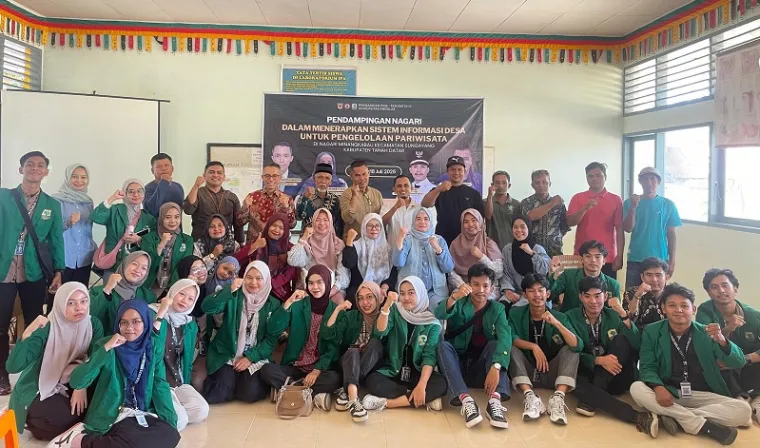
Universitas Andalas carried out
a community assistance program in Nagari Minangkabau, Sungayang District, Tanah
Datar Regency, to strengthen digitally based tourism governance at the village
level. This initiative is closely linked to SDG 8 on Decent Work and Economic
Growth and SDG 9 on Industry, Innovation and Infrastructure, as it aims to
expand local tourism potential through the use of village information systems
and technology-based management.
The activity took place on
Friday, July 18, 2025, as part of Universitas Andalas’ PKM-TKM Batch II
program. The team involved Gusminarti, S.H., M.H. from the Faculty of Law, Dr.
Eng. Budi Rahmadya from the Faculty of Information Technology, and Dr.
Yulihasri, S.E., MBA from the Faculty of Economics and Business, working
together with Universitas Andalas KKN students. The program was designed to
improve the capacity of nagari officials and the community in using village
information technology, especially for promoting and managing local tourism
potential in support of a smart village model.
One of the main focuses of the
program was the development of an integrated and easily accessible village
information system to support transparency, efficiency, and the promotion of
tourism destinations in Nagari Minangkabau, an area described as rich in
cultural and historical value. Through this approach, the initiative sought to
connect tourism development with better digital governance so that local
potential could be managed more effectively and introduced to a wider audience.
Wali Nagari Minangkabau, Akbar,
welcomed the initiative and expressed hope that the village information system
being developed could become the foundation for building a digitally empowered
nagari with economic independence through the tourism sector. He described the
program as a concrete form of synergy between a university and the nagari
government in creating governance that is both technology-based and
sustainable.
The participants, who included
nagari officials, members of the Nagari Consultative Body, BUMNag
representatives, and MSME actors, responded enthusiastically to the program.
They said the activity was highly beneficial, especially as Nagari Minangkabau
is currently in the process of developing its tourism sector, both by improving
existing attractions and by exploring new tourism potential. The program was
also seen as a way to help introduce and revitalize the history and culture of
Minangkabau from its place of origin, where historical heritage is still
preserved.
Universitas Andalas KKN students
played an active role throughout the assistance process, from collecting data
and training local officials to simulating the implementation of the tourism
information system. They also gathered community aspirations regarding tourism
development and local information technology needs. Overall, the initiative
reflects how collaboration between lecturers, students, and local communities
can help build a more innovative and technology-driven tourism ecosystem at the
nagari level.