
Universitas Andalas Students Develop Antibacterial Water Filter from Areca Waste in Support of SDG 6 and SDG 12
Padang, 21 October 2025
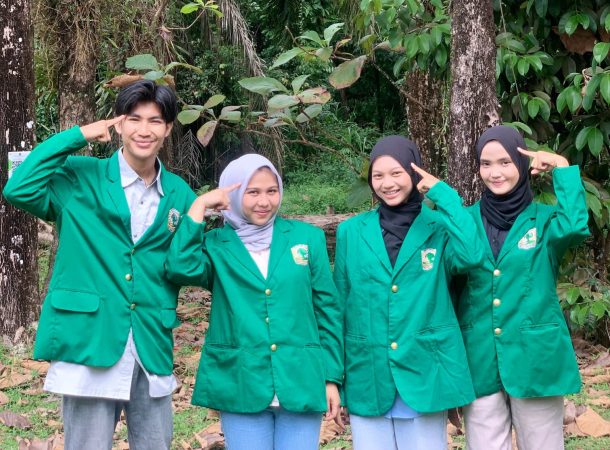
Universitas Andalas students
have developed an environmentally friendly antibacterial water filtration
membrane made from areca fiber waste, highlighting the university’s
contribution to sustainable innovation in clean water technology. This
initiative is closely related to SDG 6 on Clean Water and Sanitation and SDG 12
on Responsible Consumption and Production, as it offers a practical solution to
water quality challenges while promoting the productive use of agricultural
waste.
The innovation was developed by
a student team consisting of Laila Rahmawati, Syalki Habib Akbar, Nova
Ramadhani, and Fatimah Syahril under the supervision of Daimon Syukri. The
research was conducted within the framework of the Student Creativity Program
in Exact Research at the Faculty of Agricultural Technology, Universitas
Andalas, and has been underway since mid-2025.
In this project, the team
utilized areca fiber waste as the main raw material because of its high
cellulose content and its abundant availability in the local area. Although
widely found in West Sumatra, the material has not yet been optimally utilized.
Through this research, the students sought to transform the waste into a
value-added product with direct benefits for the wider community.
The production process involved
a series of chemical treatments, including delignification, bleaching, acid
hydrolysis, and acetylation, to produce cellulose acetate. The material was
then combined with Fe₃O₄ nanoparticles, which are known to have adsorption and
antibacterial properties. Through this approach, the team succeeded in creating
a membrane designed to improve water filtration performance while remaining
environmentally friendly.
Laboratory testing showed
promising results. The membrane, composed of cellulose acetate and nano-Fe₃O₄
at an addition level of 0.25 to 0.5 percent, was reported to reduce coliform
bacteria by around 95 percent. This result indicates the potential of the
innovation to be developed further as an alternative water filtration
technology that is both effective and sustainable.
In addition to its technical
performance, the innovation also reflects the principles of a circular economy.
By converting areca waste into a useful filtration product, the research
demonstrates how local resources can be processed into solutions with
environmental and social value. The students also noted that West Sumatra is
one of Indonesia’s major areca-producing regions, making the development of
this technology especially relevant to local potential.
Looking ahead, the team sees
broader opportunities for the application of this membrane, not only for
household water filtration but also for wastewater treatment if the technology
continues to be refined. They also plan to improve the membrane’s structural
strength so that it can be applied more widely outside the laboratory.
This innovation shows that
student research at Universitas Andalas is not only generating academic
outcomes, but also producing concrete solutions to environmental challenges.
Through the development of an antibacterial water filter from areca waste,
Universitas Andalas continues to strengthen its role in encouraging
science-based innovation that supports sustainability and community well-being.