
Universitas Andalas KKN Students Promote Early Detection of Non-Communicable Diseases in Support of SDG 3 and SDG 11
Padang, 31 July 2025
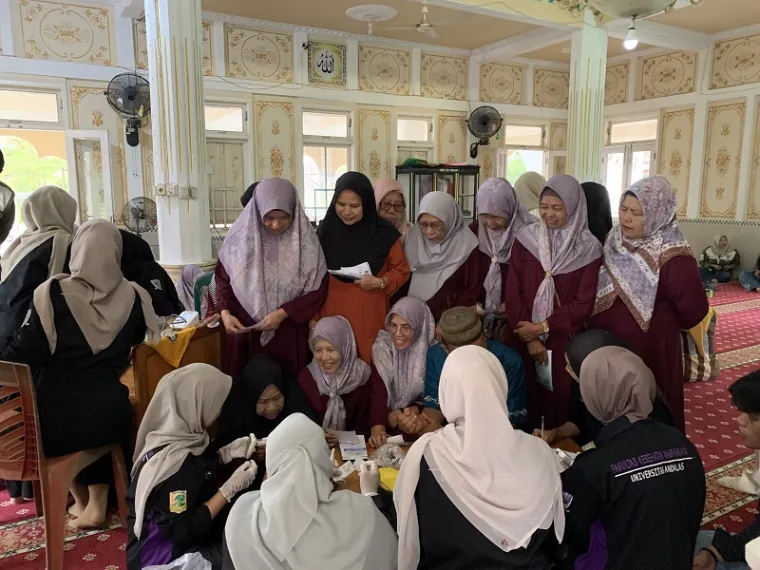
Students participating in the
Universitas Andalas KKN community service program carried out an initiative in
Nagari Tanjung Bingkung, Solok Regency, to encourage early detection of
non-communicable diseases through health screening, education, and healthy
lifestyle outreach. The activity is closely linked to SDG 3 on Good Health and
Well-being and SDG 11 on Sustainable Cities and Communities, as it aims to
improve community health access while strengthening local resilience through
preventive health action.
According to the report
published on July 31, 2025, the program responded to growing concern over
non-communicable diseases such as hypertension, diabetes mellitus, heart
disease, and stroke, which were described as “silent killers” because they
often do not show symptoms in the early stages. The article noted that the
prevalence of these diseases continues to rise in Indonesia and has become a
major cause of illness and death. In Nagari Tanjung Bingkung, the risk was
considered high because many residents, including both productive-age adults
and older people, were not accustomed to undergoing regular health checks.
Recognizing this situation, the
Universitas Andalas KKN students organized a program that went beyond free
health checks. Their activities included counseling sessions, education on
healthy lifestyles, and the distribution of informational leaflets. Through
outreach in several jorong, residents were introduced to the dangers of
non-communicable diseases and the importance of early detection. The education
also focused on simple preventive measures such as maintaining blood pressure,
controlling blood sugar, and managing diet properly.
The free health screening was
conducted at several locations, including the wali nagari office, community
health cadres’ homes, and mosques. Residents received examinations covering
body weight, height, waist circumference, blood pressure, blood sugar, and
cholesterol levels. The activity also involved the local public health center
as well as lecturers from Universitas Andalas, reflecting a collaborative
approach to improving public health awareness at the community level.
To increase public participation,
the students also organized regular healthy exercise sessions with the
community every Saturday morning. After the physical activity, residents were
given access to health screening services on site. This approach was reported
to be effective in attracting public interest while also providing a direct
example of the importance of staying physically active to maintain health.
Overall, the initiative showed
how Universitas Andalas students can contribute directly to community
well-being through preventive health education and accessible early screening.
By combining health checks, awareness campaigns, and public engagement, the
program helped encourage residents of Nagari Tanjung Bingkung to pay closer
attention to their health and take earlier action against the risk of
non-communicable diseases.