
Universitas Andalas Environmental Study Center Holds Workshop on Urban Waste Circularity in Support of SDG 11 and SDG 12
Padang, 08 January 2025
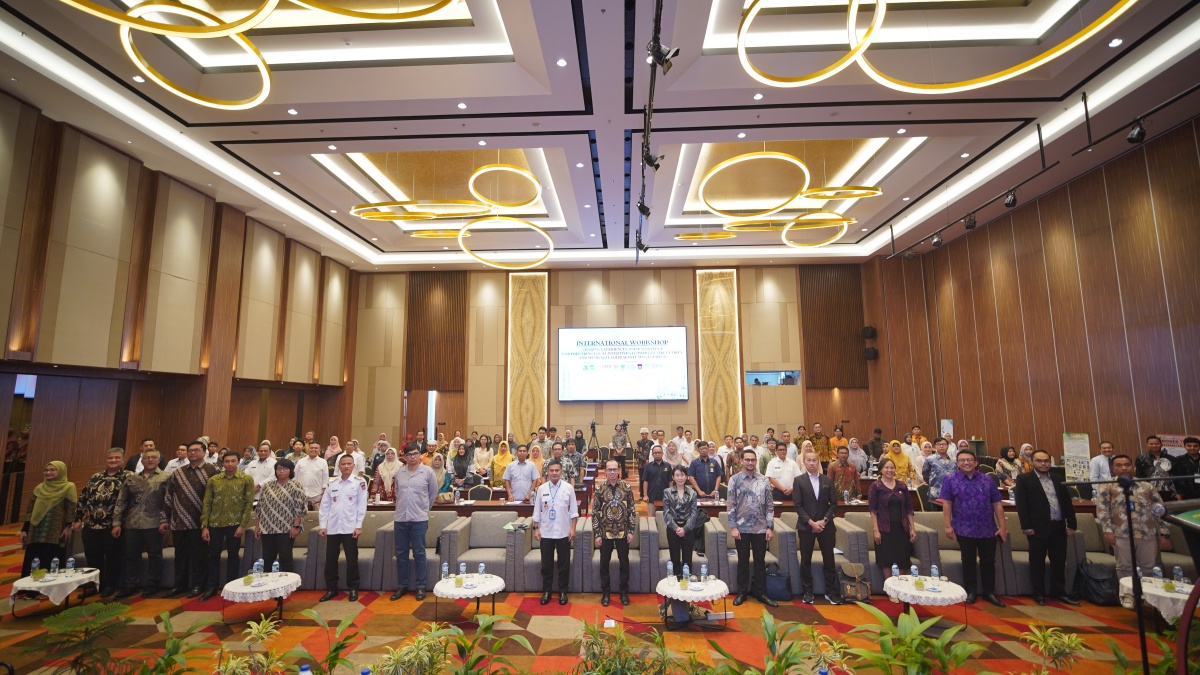
The Environmental Study Center
of Universitas Andalas held a workshop titled “Enhancing Circularity and Urban
Waste Management” in Padang on Wednesday, January 8, 2025, as part of efforts
to promote more sustainable waste management practices. The initiative is
closely related to SDG 11 on Sustainable Cities and Communities and SDG 12 on
Responsible Consumption and Production, as it focused on strengthening urban
waste governance, reducing landfill pressure, and encouraging circular economy
approaches.
The workshop took place at Hotel
Grand Zuri and was designed as a forum for sharing experiences and knowledge on
local initiatives as well as practical guidance for addressing waste management
challenges in a sustainable manner. The event featured keynote speakers Dr.
Novrizal Tahar from the Directorate of Waste Management of the Ministry of
Environment of the Republic of Indonesia and Mr. Sandhi Eko Bramono
Poedjastanto, ST, M.Eng from the Directorate of Sanitation of the Ministry of
Public Works, followed by a panel discussion.
Speaking at the event, Dr. Didi
Ariadi, M.Si, Assistant II of the Regional Secretariat of Padang City,
reaffirmed the Padang City Government’s commitment to the zero waste 2050
program, which aligns with national policy directions. He explained that the
city has implemented various strategies, including waste separation at the
source, which has helped reduce the volume of waste sent to the final disposal
site by up to 30 percent. He also noted that Padang generates around 600 tons
of waste per day, much of which has been reduced through composting,
institutional strengthening, and collaboration with stakeholders through the
establishment of Waste Management Institutions at the subdistrict level.
Didi added that the city has
also optimized the Padang Bagoro program and the Padang Memilah campaign as
part of efforts to support the circular economy. He expressed hope that the
workshop would produce strategic recommendations capable of strengthening
synergy among the central government, local government, and universities in
building sustainable waste management systems. In the same forum, Deputy
Director for IMT-GT Subregional Cooperation Muhammad Hafiz Hannibal MRI, MSc
said that Padang has become one of the examples of urban waste management and
circular economy implementation, particularly through integrated waste handling
linked to carbonization, recycling industries, and landfill burden reduction
strategies.
Universitas Andalas Rector Efa
Yonnedi, Ph.D., emphasized the importance of innovative solutions in addressing
urban waste challenges. He stated that population growth and changing
consumption patterns have increased the volume of waste, making it a serious
threat to public health, the environment, and local economies. He underlined
the need for an integrated approach focused on waste reduction, recycling,
composting, and the adoption of new technologies, noting that such an approach
could ease pressure on landfills, reduce environmental impacts, and improve
both public health and cost efficiency.
He further stressed that coordinated cooperation among government, business, and society is essential to building a waste management system capable of meeting present and future challenges. Through this workshop, Universitas Andalas reaffirmed its role as a catalyst for sustainable environmental management. The university expects that innovative solutions and cross-sector collaboration emerging from the forum will become strategic steps in addressing urban waste management challenges at both the local and national levels.