
Universitas Andalas Disaster Response Team Prioritizes Healthcare Services for Isolated Residents in Malalak in Support of SDG 3 and SDG 11
Padang, 10 November 2025
Universitas Andalas has once again demonstrated its
commitment to assisting disaster-affected communities by deploying its Disaster
Response Team to Malalak District, Agam Regency, West Sumatra. This
humanitarian action is aligned with the Sustainable Development Goals (SDGs),
particularly SDG 3 (Good Health and Well-being), which emphasizes the
importance of access to healthcare services, and SDG 11 (Sustainable Cities and
Communities), which promotes community resilience in responding to and
recovering from disasters.
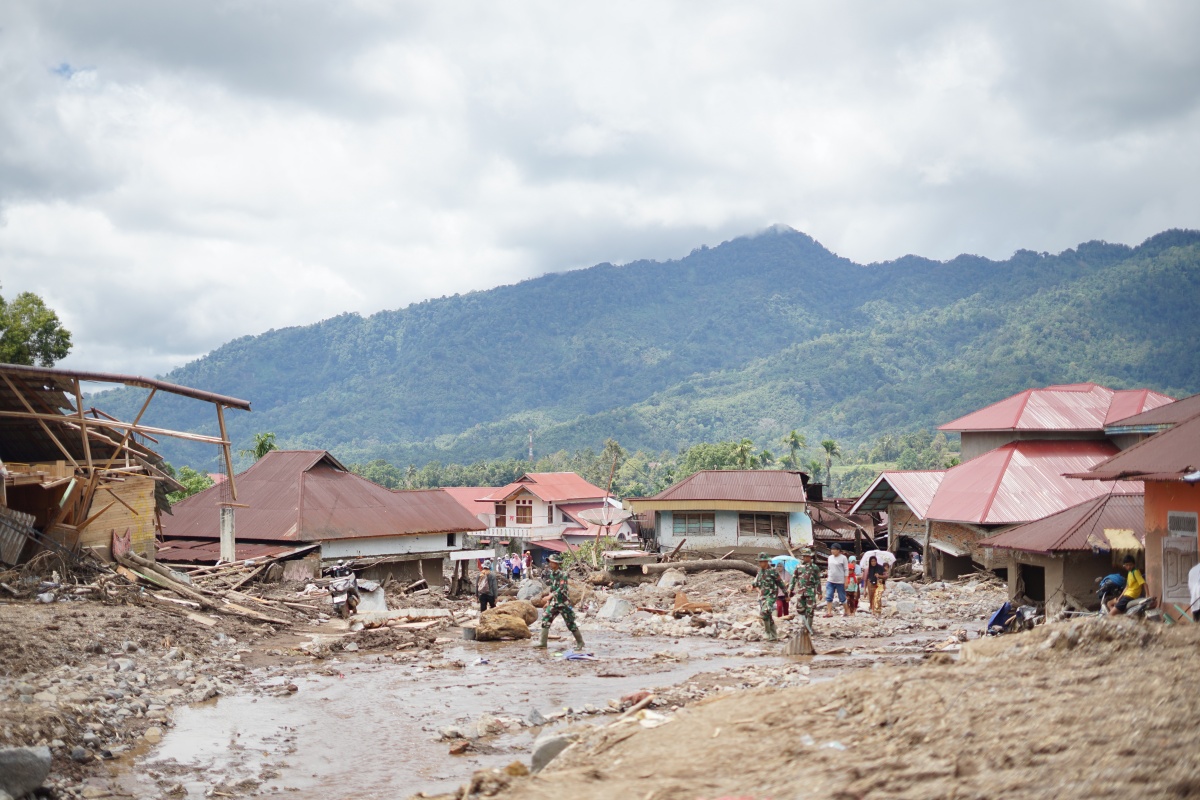
The Universitas Andalas Disaster Response Team went
directly to the area affected by flash floods in Malalak District on Sunday,
November 7, to ensure that disaster response efforts could reach communities
still facing serious impacts due to damaged infrastructure and geographic
isolation. The visit was part of the university’s commitment to ensuring that
the assistance provided would be targeted and responsive to the most urgent
needs of the affected communities.
Based on field observations, two nagari were identified
as the most severely affected, namely Nagari Malalak Timur and Nagari Malalak
Utara. In Malalak Timur, Jorong Toboh was among the areas that suffered heavy
damage after the connecting bridge was cut off, leaving access possible only by
two-wheeled vehicles. This condition greatly limited the distribution of
logistical aid.
An even more difficult situation was reported in
Nagari Malalak Utara. Several areas, such as Jorong Sigiran and Jorong Koto
Andaleh, were still isolated and difficult to reach. Residents in these areas
had not yet received adequate healthcare services and were still in need of
logistical assistance, particularly raw food supplies to meet their daily
needs.
In light of these conditions, Universitas Andalas
decided to focus its disaster response on the healthcare sector, especially in
locations that had not yet been reached by government medical assistance. The
team also planned to establish emergency health posts in the isolated areas so
that medical services could be provided directly to the affected communities.
In addition to addressing the medical needs of
residents, the Universitas Andalas team also found that local volunteers who
had been helping clear landslide debris and distribute aid were beginning to
suffer from physical exhaustion due to working continuously. Therefore, the
team also identified an urgent need for vitamins and supplements to help
maintain the volunteers’ stamina so they could continue supporting the recovery
process in the field.
Through this initiative, Universitas Andalas seeks
to ensure that humanitarian assistance is not focused solely on the
distribution of logistics, but also on healthcare services and support for
volunteers working on the front lines of disaster response. The presence of the
university’s disaster response team is expected to help accelerate the recovery
of the Malalak community while strengthening community resilience in facing
future disasters.