
Universitas Andalas’ Dadiah Research Offers New Hope for Alzheimer’s Treatment Based on Local Wisdom in Support of SDG 3 and SDG 9
Padang, 30 September 2025
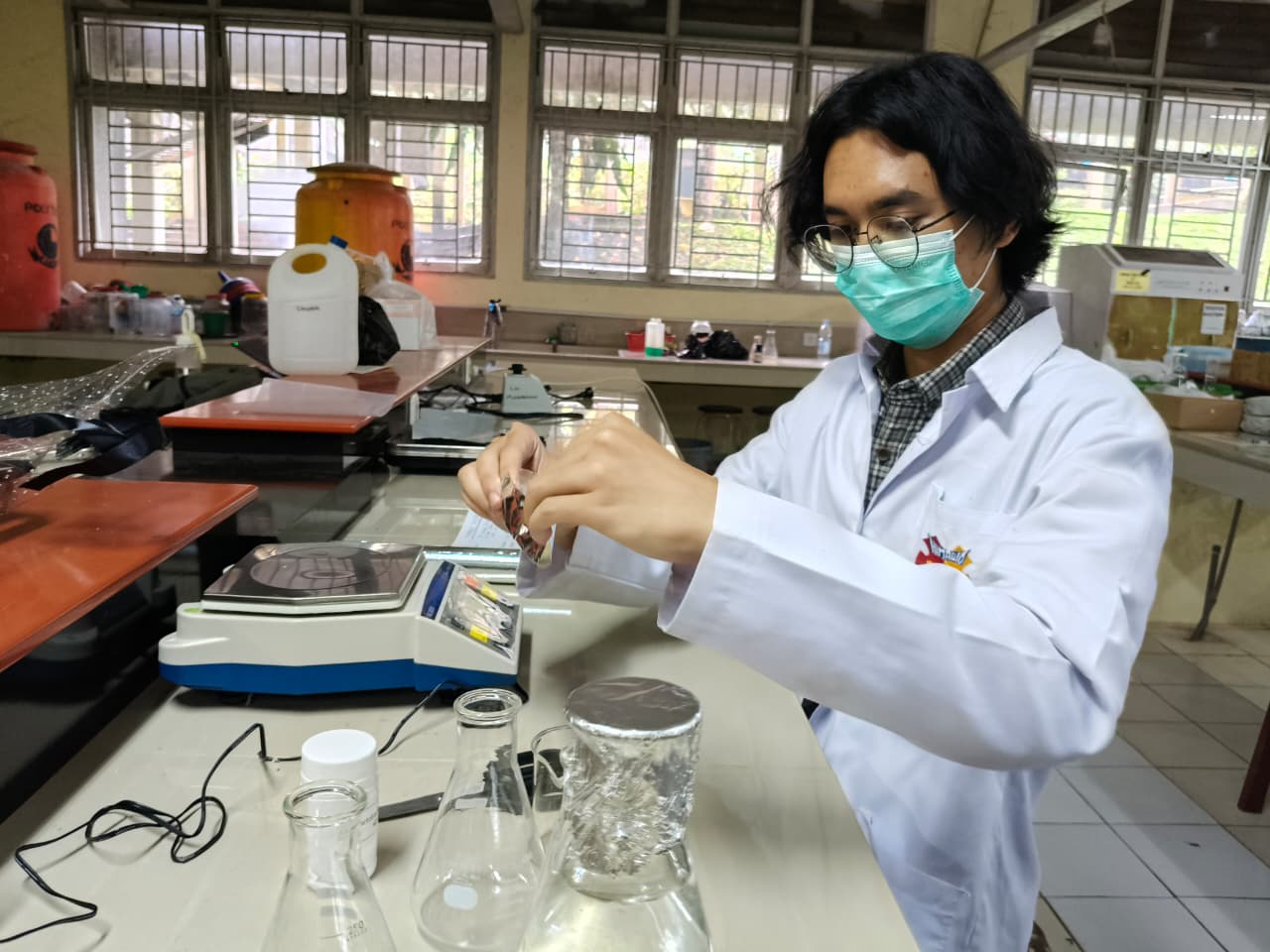
Research conducted by students of the Biology
Department, Faculty of Mathematics and Natural Sciences, Universitas Andalas,
has opened new hope for the treatment of Alzheimer’s disease through the use of
dadiah, a traditional fermented buffalo milk product from Minangkabau culture.
This initiative is closely aligned with SDG 3 (Good Health and Well-being) and
SDG 9 (Industry, Innovation and Infrastructure), as it connects the potential
of traditional food with modern health innovation to explore the relationship
between the gut and the brain in neurodegenerative disease.
The research team is led by Muhammad Samudra
Ilham, with members Febi Febianti, Zhafira Nabila Irsyah, Sofiana Kemal, and
Muhammad Naufal. Their study, titled The Neuroprotective Potential of Dadiah as
an Alzheimer’s Therapy through Microbiota Balance with Histopathological and
Bioinformatics Analysis, has secured funding and is currently underway. The
research focuses on the potential of dadiah as an alternative therapy for
Alzheimer’s disease, which is reported to affect more than 4.2 million people
in Indonesia and is characterized by nerve cell damage caused by increased
beta-amyloid plaque, leading to memory decline and impaired cognitive function.
What makes this study distinctive is its use of
the gut-brain axis approach, a two-way communication pathway between the
digestive system and the brain. The team chose to investigate dadiah because
this traditional food is known for its high probiotic potential and is
dominated by lactic acid bacteria, reportedly reaching 10^8 cfu/g. Building on
previous clinical studies showing that probiotic supplementation can
effectively improve cognitive function in Alzheimer’s patients, the Universitas
Andalas team designed an in vivo experimental study using Alzheimer’s model
mice, combined with histopathological and bioinformatics analyses.
Through this research, the team aims to prove
that probiotics derived from dadiah have a neuroprotective effect on the brains
of mice through metabolites that interact with key Alzheimer’s proteins and
modulate the gut microbiota. Muhammad Samudra Ilham described the study as a
blend of preserving Minangkabau culture, increasing the added value of the
traditional dadiah product, and advancing understanding of the molecular
mechanisms of probiotic interaction with Alzheimer’s disease. The team is also
supervised by Rita Maliza, S.Si., M.Si., Ph.D., who has a research background
in Biochemistry and Human Biology.
This research therefore not only strengthens
scientific innovation based on local potential, but also highlights that
traditional food heritage can become part of the search for future health
solutions.