
UNAND Supports SDG 9 and SDG 16 through SIPANDA Digital Archive Innovation
Padang, 24 January 2026
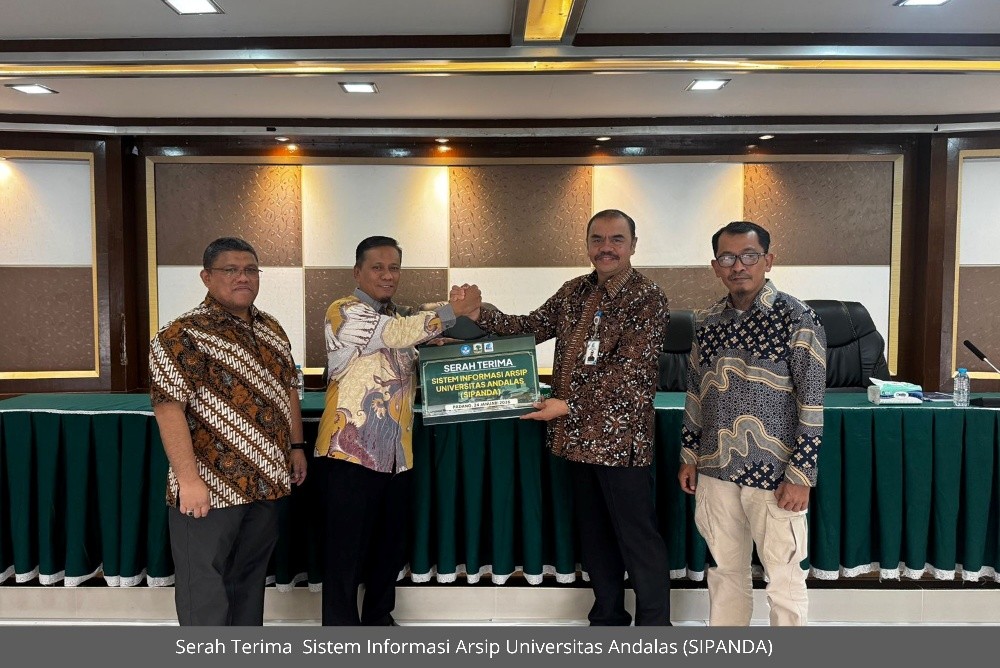
Padang, January 24, 2026 — Universitas Andalas (UNAND) continues to strengthen its
transformation toward a digital-based campus by launching and handing over the
SIPANDA application, or Sistem Informasi Arsip Andalas, as part of
efforts to improve archive management across the university.
The handover of SIPANDA was carried
out with Rudi Anton, S.H., M.H., Director of National Archival Information at
the National Archives of the Republic of Indonesia, known as ANRI. The activity
was held on Saturday, January 24, at the University Senate Meeting Room and was
combined with a socialization session on the use of the application and archive
reduction procedures.
The launch of SIPANDA marks a
strategic step for UNAND in reducing the accumulation of physical documents
that have long required significant storage space. In addition to archive space
limitations in each unit, piles of paper documents were also considered to
affect workplace comfort and employee mental well-being. Through digital
archive management, UNAND seeks to create a more efficient, organized, and
healthier administrative environment.
UNAND Secretary, Dr. Aidinil Zetra,
emphasized that archive digitalization is an effort to save time and improve
work efficiency. According to him, digital archive management is an important
component of an institution’s bureaucratic system, including in higher
education. Better and digitally integrated archive management is expected to
make administrative processes faster, more accountable, and easier to access
when needed.
He also stated that strengthening
archive management in 2026 is important to anticipate future administrative and
documentation challenges. Proper archive governance will serve as a strong
foundation when documents are needed as administrative and legal evidence.
UNAND’s commitment to improving its
archival system had already begun at the end of 2025 through training for
archivists and archive managers across the university. The training was
intended to help archive personnel manage records in a more orderly, systematic,
and regulation-compliant manner.
Meanwhile, Rudi Anton explained that
managing archives is closely related to managing the long-term business of an
institution. He underlined that a campus will continue to operate even when its
leadership changes, and archives will remain an important information reserve
and primary evidence if problems arise in the future. He expressed hope that
SIPANDA would strengthen UNAND’s archival system in a sustainable and
integrated way.
The activity concluded with a
technical introduction to the SIPANDA application for participants. Through
this socialization, each work unit within UNAND is expected to understand how
to use the application optimally and support the transition from physical
archive management to a more integrated digital system.
This initiative supports SDG 9
Industry, Innovation and Infrastructure by introducing a digital
information system that strengthens institutional infrastructure and supports
innovation in university administration. SIPANDA reflects UNAND’s effort to
modernize internal governance through technology-based services.
The program also aligns with SDG
16 Peace, Justice and Strong Institutions because proper archive management
strengthens institutional accountability, administrative transparency, and
legal certainty. By ensuring that records are managed systematically and can
serve as reliable evidence, UNAND contributes to stronger and more accountable
institutional governance.
Through the launch of SIPANDA, UNAND
reaffirmed its commitment to building a more efficient, integrated, and
accountable digital campus. The application is expected to become an important
foundation for modern archive governance and long-term institutional
sustainability at Universitas Andalas.