
UNAND Supports SDG 9 and SDG 11 through Railway Reactivation Dialogue for West Sumatra’s Economic Growth
Padang, 18 February 2026
Padang, February 18, 2026 — Universitas Andalas (UNAND) encouraged the reactivation
of the Kayu Tanam–Padang Panjang railway line as a strategic effort to
strengthen economic growth and public welfare in West Sumatra.
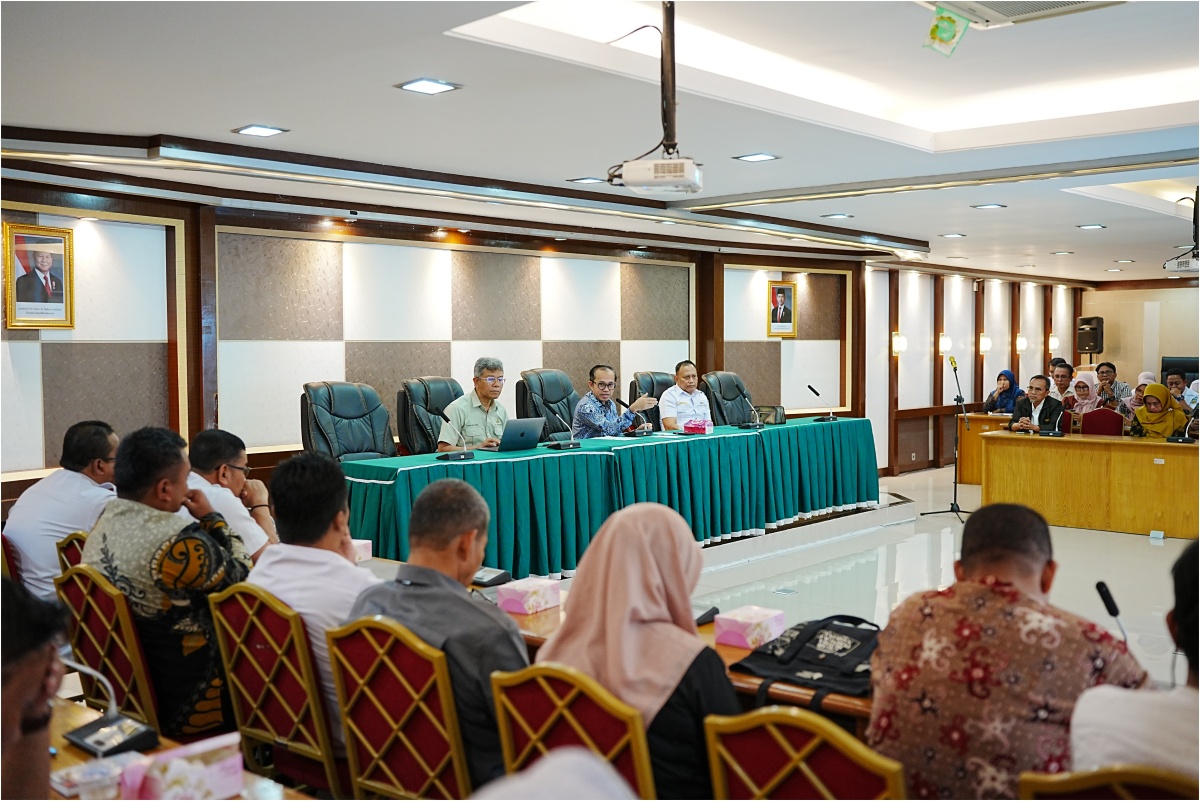
The issue was discussed in a Focus
Group Discussion held at the Senate Meeting Room, Rectorate Building, Limau
Manis Campus, on Wednesday, February 18. The forum presented Managing Director
of Commercial and Business Development of PT Kereta Api Indonesia (Persero),
Rafli Yandra, and UNAND Professor of Civil Engineering, Prof. Ir. Eng. Febrin
Anas Ismail. The discussion was moderated by the Head of UNAND’s Center for
Transportation Studies, Ir. Yosritzal, Ph.D.
The FGD was also attended by
stakeholders from the Transportation Agency, Tourism Agency, Culture Agency, Regional
Development Planning Agency, the Regional House of Representatives of West
Sumatra Province, and academics. Their presence reflected the importance of
cross-sector collaboration in discussing the future of railway transportation
in West Sumatra.
Rafli Yandra explained that West
Sumatra has a railway network that is relatively complex and complete,
inherited from the Dutch and Japanese colonial periods. However, economic and
political dynamics have caused some railway lines to remain active while others
are no longer operating. He stated that inactive railway lines have become a
challenge that requires serious efforts for reactivation and renewal so that
railway transportation in West Sumatra can move forward and contribute to
regional development.
UNAND Rector emphasized that,
particularly for West Sumatra, railway reactivation can become an engine for
economic growth and improved community welfare. However, he acknowledged that
the project may not be commercially profitable in the short term. For this
reason, government intervention, including the possibility of a subsidy scheme,
is needed so that this strategic public-interest project can continue to move
forward.
The Rector also underlined that
railways are an environmentally friendly mass transportation mode that can
carry many passengers at once and has globally recognized performance. He
expressed confidence that with a shared vision among all stakeholders, railway
lines built since the Dutch East Indies era can be revived.
Prof. Febrin Anas Ismail agreed that
the reactivation of the Kayu Tanam–Padang Panjang railway line is important,
especially to support the tourism and logistics sectors. He emphasized the need
for a comprehensive strategy involving resources from both local and central
governments.
According to Prof. Febrin,
universities can contribute by preparing a grand design, developing a timeline,
and conducting in-depth studies such as feasibility studies. He also stressed
that all stakeholders need to share roles so that the direction of railway
development becomes more structured.
He further noted that in developed
countries, railway lines have proven to provide efficiency in various aspects,
including mobility, goods distribution, and the strengthening of tourism
destinations. Through this FGD, UNAND reaffirmed its commitment to serving as a
strategic partner for government and industry in formulating research-based
policies, so that the reactivation of railway lines in West Sumatra can be
carried out in a directed, sustainable, and impactful manner.
This initiative supports SDG 9
Industry, Innovation and Infrastructure by encouraging the reactivation and
modernization of railway infrastructure as part of regional development.
Through research-based planning, feasibility studies, and collaboration with
transportation stakeholders, UNAND contributes to strengthening resilient and
sustainable infrastructure in West Sumatra.
The discussion also aligns with SDG
11 Sustainable Cities and Communities because railway transportation can
support more inclusive, efficient, and environmentally friendly mobility. The
reactivation of the Kayu Tanam–Padang Panjang line is expected to improve
public transportation access, support tourism connectivity, and contribute to
more sustainable regional development.
Through this forum, UNAND
demonstrated its role not only as an academic institution, but also as a
strategic partner in shaping development policies. By bringing together
government, industry, and academic stakeholders, UNAND continues to support transportation
solutions that can strengthen the economy, improve mobility, and create real
benefits for the people of West Sumatra.