
UNAND KKN Students Support SDG 3 and SDG 15 through TOGA Planting Innovation in Sungai Tarab
Padang, 02 February 2024
Batusangkar, February 2, 2024 — Universitas Andalas (UNAND) students participating in the
2024 Thematic Community Service Program, known as KKN Tematik, collaborated
with the community of Nagari Sungai Tarab, Tanah Datar Regency, to revitalize
unused land through the planting of Tanaman Obat Keluarga or TOGA.
The activity was initiated by UNAND
students from various faculties as one of the work programs of the 2024 KKN
Tematik. The program focused on encouraging the community to make better use of
available land by turning idle areas into productive spaces planted with family
medicinal plants.
Intan, the person in charge of the
TOGA planting program in Nagari Sungai Tarab, said the activity was expected to
encourage the community to become more independent and productive in utilizing
existing plants and land. She also explained that the program served as an
educational effort by UNAND KKN students to help local residents understand how
unused land can be transformed into a more beneficial area.
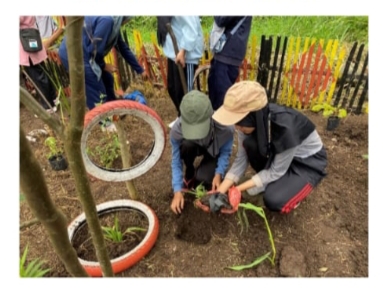
Through this program, the students
and local residents worked together in a community clean-up activity to prepare
the land before planting various types of TOGA seedlings. The activity was also
attended by PKK administrators of Nagari Sungai Tarab, who took part in
supporting the students in implementing the program.
According to Intan, the plants grown
on the revitalized land are expected to bring direct benefits to the people of
Nagari Sungai Tarab. In addition to making unused land more productive, TOGA
plants can also serve as an option for first aid treatment using family
medicinal plants.
The program received positive
appreciation from the local community. One PKK administrator of Nagari Sungai
Tarab said the work program carried out by UNAND KKN Tematik students had
provided a very good impact, especially for PKK members who felt helped by the
revitalization of idle land into a more productive area. The community also
welcomed the students’ initiative and expressed readiness to support efforts to
bring the land back to life.
In addition to land revitalization
and TOGA planting, the UNAND KKN Tematik students also introduced a simple
technology innovation to support public education. On the signboard placed in
the TOGA garden, the students added information about the plants that can be accessed
directly by the community through a QR code. This feature allows residents to
obtain plant-related information more easily while strengthening the
educational value of the program.
This activity supports SDG 3 Good
Health and Well-being by promoting the use of family medicinal plants that
can help communities access simple, household-level health support. Through
TOGA planting, residents are encouraged to recognize the benefits of medicinal
plants as part of daily health awareness and first aid practices.
The program also aligns with SDG
15 Life on Land because it revitalizes unmanaged land and turns it into a
productive green area. By planting medicinal plants and encouraging community
participation in land care, the initiative supports better land use, local
environmental stewardship, and more sustainable village development.
Through this initiative, UNAND KKN
Tematik students demonstrated how community service can combine education,
environmental care, and simple technology. The TOGA planting program in Nagari
Sungai Tarab not only helped revive idle land but also strengthened
collaboration between students, PKK members, and the local community in
building a healthier and more productive nagari.