

UNAND KKN Students Support SDG 2 and SDG 12 through the One Thousand Seedlings Program for Community Food Resilience
Padang, 05 February 2026
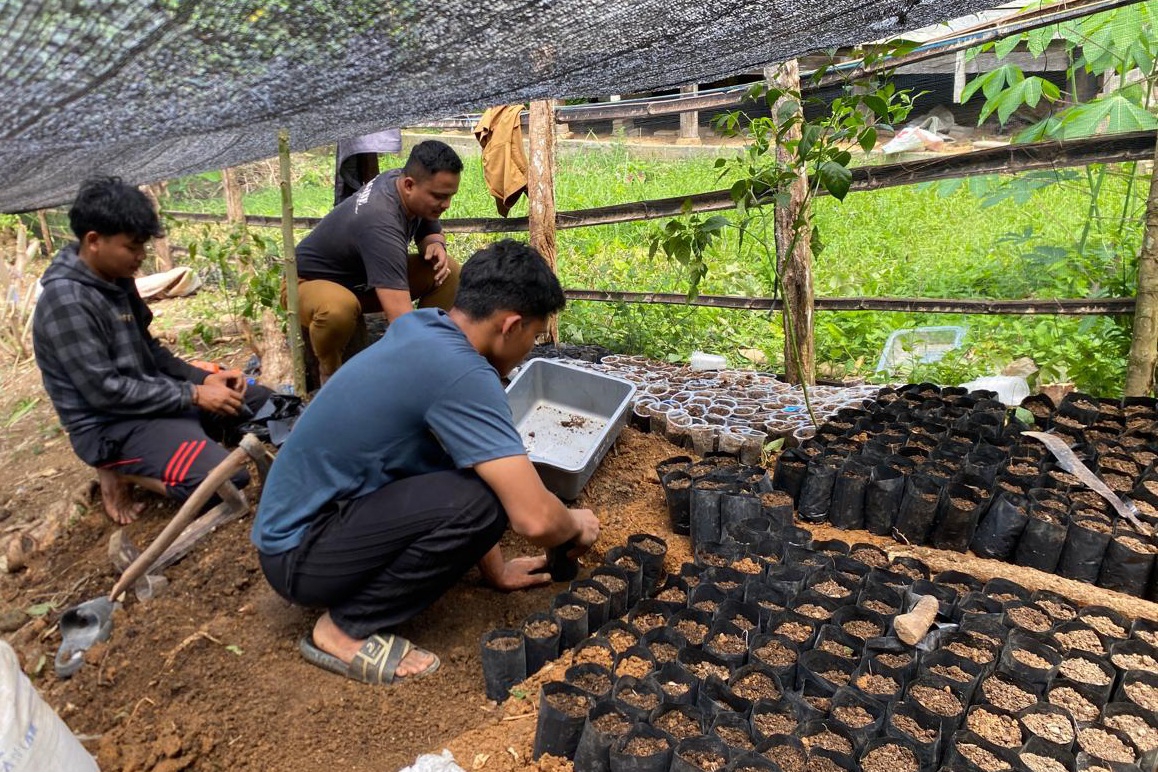
Sijunjung,
February 5, 2026 —
Universitas Andalas (UNAND) students participating in the Community Service
Program, known as KKN, carried out the One Thousand Seedlings Program as a
concrete contribution to strengthening food resilience and community
empowerment.
The program focuses on cultivating
horticultural seedlings, especially eggplant and cayenne pepper, which will
later be distributed to the local community. The activity was conducted at the
demonstration plot located behind the Wali Nagari Office and involved both KKN
students and nearby residents in the seedling preparation and maintenance
process.
Through a participatory approach,
the community did not only become recipients of the seedlings, but also took
part in learning how to prepare and care for plants properly. This educational
aspect is expected to encourage residents to develop practical skills in
home-based agriculture and make better use of available household land.
Putra, a UNAND KKN student and
person in charge of the work program, explained that the One Thousand Seedlings
Program aims to help the community optimize yard land while encouraging
household food independence. He said the eggplant and cayenne pepper seedlings
are expected to become an initial step for residents to grow their own
vegetables and kitchen spices, reduce household expenses, and improve family
nutrition.
The seedling process was carried out
using simple methods that are easy for the community to apply. Students used
polybags and planting media adjusted to local environmental conditions. The
seedlings are regularly maintained by UNAND KKN students until they reach the
appropriate age for planting. After that, they will be distributed free of
charge to residents so they can be planted in home yards or personal gardens.
The program received a positive
response from local residents, as it was considered highly beneficial,
especially amid fluctuating food prices such as cayenne pepper. Through the
distribution of seedlings, the community is expected to be able to produce part
of its own vegetable needs independently.
This initiative supports SDG 2
Zero Hunger by promoting household food resilience through home-based
cultivation of vegetables and kitchen spices. By encouraging residents to grow
eggplant and cayenne pepper in their own yards, the program helps strengthen
local food availability and supports better family nutrition.
The program also aligns with SDG
12 Responsible Consumption and Production because it encourages communities
to use available land more productively and consume food more responsibly.
Through simple seedling methods and community education, the activity promotes
a practical model of sustainable household food production.
Through the One Thousand Seedlings
Program, UNAND KKN students demonstrated that community service can create
lasting benefits by combining education, participation, and local food
empowerment. The program is expected to leave a sustainable impact not only
through the seedlings distributed, but also through increased public awareness
of the importance of household farming and village-based food resilience.