
UNAND and Donors Support SDG 11 and SDG 17 through HUNSELA for Flood-Affected Residents in Batu Busuak
Padang, 26 January 2026
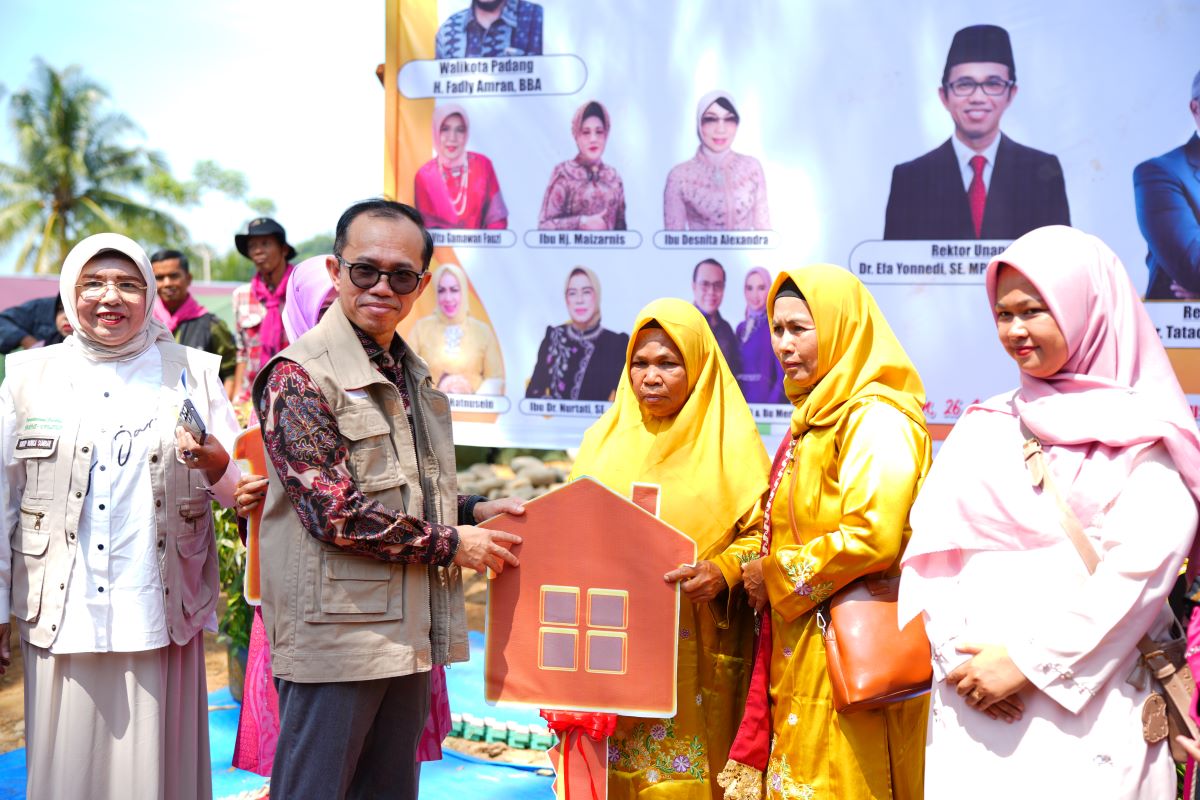
Padang, January 26, 2026 — Universitas Andalas (UNAND), together with donors,
inaugurated Hunian Sementara Sehat dan Layak or HUNSELA for residents
affected by flooding in Kampung Talang, Batu Busuak, on Monday, January 26.
The construction of HUNSELA began on
December 15, 2025, and resulted in 11 housing units and 10 sanitation
facilities. The temporary housing will be occupied by 11 families consisting of
40 people from Suku Tanjung. The residents come from the same clan, while the
land used for the HUNSELA construction belongs to the niniak mamak of
Suku Tanjung, giving the program strong cultural and communal value.
Beyond serving as temporary housing,
the area is also planned to be developed into permanent housing with support
from the Indonesian Chamber of Commerce and Industry, known as KADIN. This
long-term plan reflects the broader commitment to help disaster-affected
residents rebuild their lives in a more sustainable way.
The development of HUNSELA was made
possible through the support of 11 main donors, including Vita Gamawan Fauzi,
Hj. Maizarnis, Desnitas Alexandra, Edha Hatnusein, Dr. Nurtati, dr. Harmen and
wife, Universitas Andalas, Universitas Negeri Padang, Universitas Gunung Jati,
Institut Teknologi Bandung, and IKA UNAND.
Representative of Suku Tanjung,
Dasrul, S.S., M.Si., said the community had prepared a long-term plan for the
area. In the future, Kampung Talang is expected to be developed into an
agro-tourism and cultural village because of its natural and social potential.
The village is also planned to become a living laboratory for Universitas
Andalas.
The housing units were designed as
type 23 homes by Prof. Fauzan from UNAND. Unlike ordinary temporary shelters,
the houses were designed with two air vents to support better air circulation,
comfort, and the health of the residents.
During the same occasion, Fadly
Amran emphasized that accelerating infrastructure recovery remains a priority.
A total of 13 bridges and 8 irrigation channels need immediate repair so that
rice fields and community land can receive water again. The central government
has also promised rehabilitation for 102 hectares of rice fields in Padang that
were buried by flood material, with work to be carried out directly by farmer
groups and funding of Rp13.4 million per hectare distributed to farmer group
accounts.
As a short-term response to the
water crisis caused by drought, hundreds of water pumps are planned to be
installed. For the long term, recovery efforts will include improving river
flows and irrigation networks to support community resilience and agricultural
recovery.
UNAND Rector Efa Yonnedi, Ph.D.,
reaffirmed the university’s commitment to being present with the community. He
said UNAND, with its expertise, is ready to become a partner in rebuilding
affected areas to become stronger and better. He also emphasized that UNAND had
been involved since the emergency response phase and would continue to
accompany residents throughout the recovery process.
This initiative supports SDG 11
Sustainable Cities and Communities by providing safer and healthier
temporary housing for disaster-affected residents while also supporting the
transition from emergency response to rehabilitation and reconstruction. The
planned development of permanent housing, infrastructure recovery, and future
agro-tourism and cultural village also reflects an effort to rebuild the
community in a more resilient and sustainable way.
The program also aligns with SDG
17 Partnerships for the Goals because it was implemented through
collaboration between UNAND, donors, alumni, universities, local community
leaders, government actors, and other stakeholders. Through this partnership,
HUNSELA became more than a housing program; it became a shared recovery effort
rooted in solidarity, cultural values, and long-term community empowerment.
Through the inauguration of HUNSELA,
UNAND reaffirmed its role as a university that is responsive to community
needs, especially in times of disaster. By combining academic expertise, donor
support, student involvement through disaster-themed community service, and
community participation, UNAND continues to contribute to post-disaster
recovery and the rebuilding of a stronger Batu Busuak community.