
UNAND and Bappenas Strengthen SDG 11 and SDG 17 through Data Collaboration for Post-Disaster Rehabilitation
Padang, 14 January 2026
Padang, January 14, 2026 — Universitas Andalas (UNAND) and the Ministry of National
Development Planning/National Development Planning Agency, known as Kementerian
PPN/Bappenas, strengthened collaboration in data collection to support the One
Data Indonesia policy and the preparation of the Master Plan for Rehabilitation
and Reconstruction.
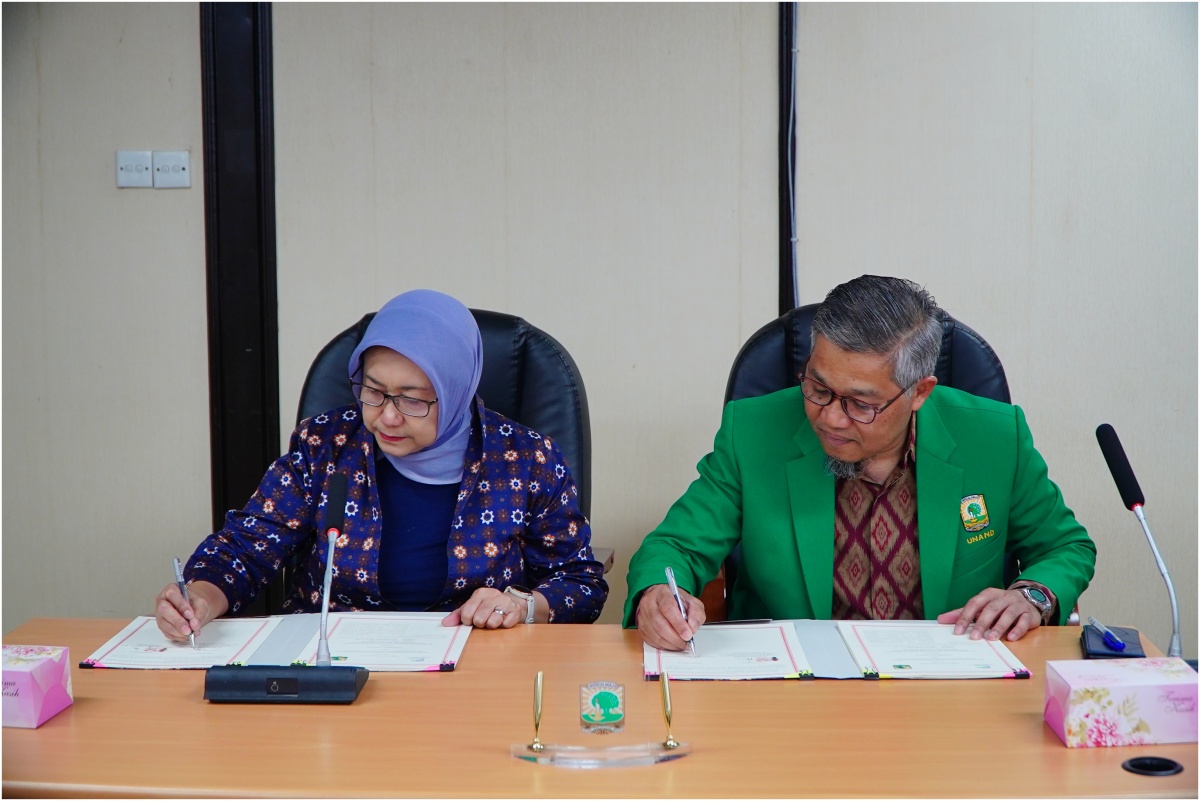
The cooperation was formalized
through the signing of a Cooperation Agreement at the Leadership Meeting Room,
Rectorate Building, Limau Manis Campus, on Wednesday, January 14. The agreement
was signed by the Deputy for Economy and Digital Transformation of Kementerian
PPN/Bappenas, Vivi Yulaswati, and UNAND Vice Rector IV for Planning, Research,
Innovation, and Cooperation, Prof. Henmaidi. This cooperation is a follow-up to
the Memorandum of Understanding agreed by both parties in December 2025.
Prof. Henmaidi said the
collaboration is a strategic step to strengthen the role of higher education
institutions in supporting data-based national development policies. He
emphasized that UNAND is committed to delivering real academic contributions by
strengthening data collection down to the village level.
According to him, the collaboration
not only supports One Data Indonesia, but also strengthens the planning of
rehabilitation and reconstruction so that it becomes more targeted, accurate,
and evidence-based. The involvement of students in the data collection process
also serves as part of the university’s community service mission while
improving human resource capacity.
Meanwhile, Vivi Yulaswati emphasized
the importance of strengthening the One Data Indonesia policy to support
adaptive and sustainable national development. She explained that One Data
Indonesia does not only function as a supporting element for the master data of
rehabilitation and reconstruction, but also becomes an important foundation for
improving development preparedness in the future.
Vivi added that collaboration with
universities such as UNAND is essential to ensure the availability of quality,
standardized data that can be used across sectors. Through this cooperation,
UNAND and Bappenas will carry out several activities, including data collection
in agreed areas, development of survey methodologies and instruments based on
One Data Indonesia standards, use of digital data collection applications, and
preparation of studies and policy recommendations for regional development
based on data and evidence.
This collaboration supports SDG
11 Sustainable Cities and Communities by strengthening post-disaster
rehabilitation and reconstruction planning through accurate and evidence-based
data. With better village-level data, recovery efforts can be planned more
effectively, helping communities become more prepared, resilient, and
sustainable after disasters.
The initiative also aligns with SDG
17 Partnerships for the Goals because it brings together a university and a
national planning institution to support public policy, digital data systems,
and regional development planning. Through this partnership, UNAND and Bappenas
demonstrate how cross-sector collaboration can produce stronger data governance
and more impactful development policies.
Through this cooperation, UNAND
reaffirmed its role as a strategic academic partner in national development. By
contributing knowledge, students, and research capacity to support One Data
Indonesia and post-disaster rehabilitation planning, UNAND continues to
strengthen its commitment to evidence-based development and community
resilience.