
The Synergy between Universitas Andalas and Semen Padang Brings Clean Water and Lighting to Mentawai Residents in Support of SDG 6 and SDG 7
Padang, 08 September 2024
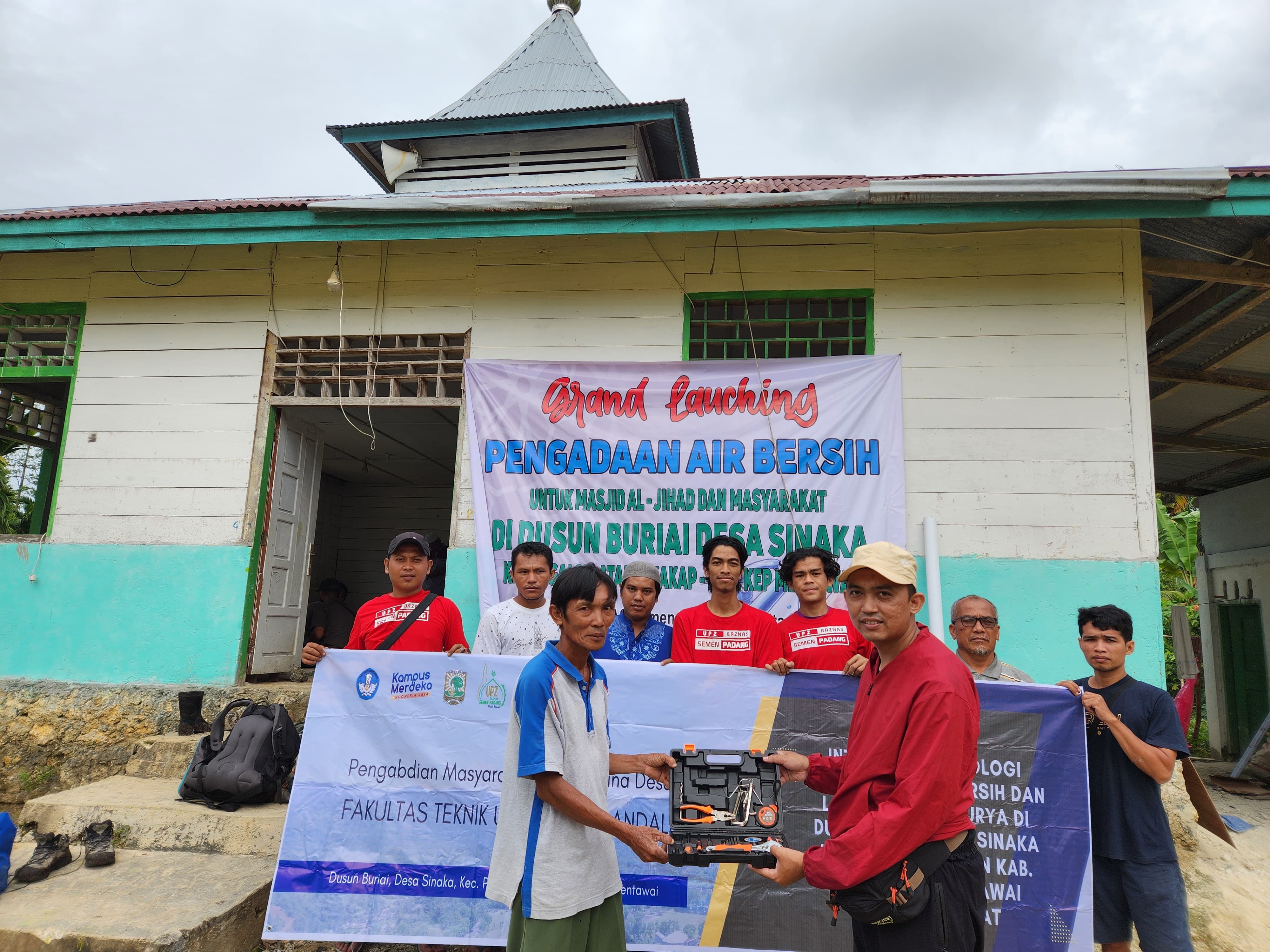
Dusun Boriai in Sinaka Village,
South Pagai District, Mentawai Islands Regency, is now beginning to enjoy
access to clean water and lighting through the Tematik Bina Desa community
service program initiated by the Faculty of Engineering of Universitas Andalas
in collaboration with the Zakat Collection Unit of Semen Padang. This
initiative is closely linked to SDG 6 on Clean Water and Sanitation and SDG 7
on Affordable and Clean Energy, as the program directly addresses the
community’s basic needs for clean water and lighting in a remote area.
The program was focused on Dusun
Boriai, which is home to 45 households and has long faced serious challenges
related to the availability of clean water and lighting, particularly on public
roads and at places of worship. Based on an initial survey conducted earlier in
the year, the team from the Faculty of Engineering of Universitas Andalas and
UPZ Semen Padang identified the community’s main needs and designed solutions
tailored to the local environmental conditions.
The community service team, led
by Dr. Eng. Dendi Adi Saputra together with Ir. Ridwan, MT, and Dr. Zaini,
designed a clean water distribution system as well as solar-powered lighting
technology. The system uses a 1.7 kW multistage centrifugal pump supported by
12 solar panels with a capacity of 250 WP, along with membrane filter-based
water purification technology capable of processing up to 1,200 gallons of
water per day. In addition, the program also included the installation of
solar-powered lamps equipped with light and motion sensors.
Implementation in the field came
with considerable geographical challenges. The team departed from Padang to
Mentawai on August 30, 2024, together with the teams from UPZ and SPI Semen
Padang, and then continued with a sea and land journey of up to five hours to reach
the location. Upon arriving in Dusun Boriai, the community welcomed the team
enthusiastically and actively participated in the construction of the solar
power system integrated with the water pump. After more than six days of work,
the solar-powered pump was successfully operated with a water discharge
capacity of 9 cubic meters per hour.
Before returning to Padang, the
team also provided training on the use of the technology to village officials
and local community leaders so that the facilities that had been built could be
operated and maintained independently. The Head of Dusun Boriai expressed
gratitude for the assistance, saying that the technology had relieved residents
from worrying about fetching water from distant places and allowed them to focus
more on worship at the mosque. This collaboration demonstrates that
partnerships between universities and social partners can deliver real
solutions that directly improve the quality of life of communities in remote
areas.