
International Collaboration for Disasters Relief: Universitas Andalas and Malaysian University provide Psychological assistant services
Padang, 02 December 2025
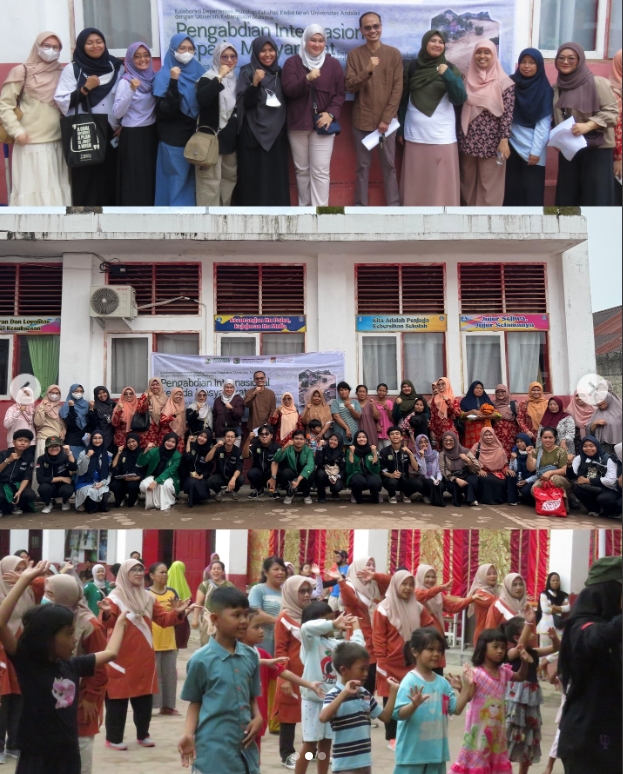
Padang – The Department of Psychology, Faculty of Medicine, Universitas Andalas, in collaboration with Dharma Wanita Universitas Andalas, conducted Psychological First Aid and psychosocial support services for survivors of flood and landslide disasters at SDN 02 Cupak Tangah, Pauh District, on Tuesday (2 December).
The activity was strengthened through international collaboration with the participation of Dr. Hilwa Abdullah binti Muhammad Mohd. Nor from Universiti Kebangsaan Malaysia (UKM), who was undertaking a visiting lecture program at the Department of Psychology, Universitas Andalas. This collaboration highlights the role of higher education institutions in cross-border humanitarian cooperation and knowledge sharing.
The community service program aimed to support disaster survivors in coping with the psychological and social impacts of hydrometeorological disasters. Beyond material losses, both children and adults require psychosocial assistance to restore emotional stability, resilience, and daily functioning. This initiative reflects Universitas Andalas’ contribution to the Sustainable Development Goals (SDGs), particularly SDG 3 on good health and well-being, with a focus on mental health support, as well as SDG 17 on partnerships for the goals through international academic collaboration.
The volunteer team consisted of 13 lecturers and education staff from the Department of Psychology, eight psychology students from Universitas Andalas, and the Chair of Dharma Wanita Universitas Andalas, Dr. dr. Laila Isrona, M.Sc., accompanied by eight members of the organization. The Head of the Department of Psychology, Dr. Rozi Sastra Purna, M.Psi., Psychologist, served as the person in charge, with Lala Septiyani S., M.Psi., Psychologist, acting as the field coordinator.
The activities were conducted from 08.00 to 11.00 WIB and involved approximately 50 children aged 5–12 years and 20 adults. The program began with morning exercise sessions as a form of emotional catharsis to reduce tension and stress. This was followed by group counseling sessions for adult survivors, as well as emotional relaxation activities, play therapy, and drawing sessions for children. These interventions were designed to foster a sense of safety and comfort while strengthening the psychological resilience of disaster survivors, contributing to community recovery and well-being.
In addition to psychological support, Dharma Wanita Universitas Andalas provided breakfast, underwear, milk, snacks, and other daily necessities to affected residents. Members of Dharma Wanita also accompanied counseling sessions, reinforcing emotional interaction and social support, which are essential elements in post-disaster recovery. This integrated approach supports SDG 11 on sustainable cities and communities by strengthening community resilience in disaster-affected areas.
Vice Rector IV of Universitas Andalas, Prof. Henmaidi, emphasized that psychosocial services are a critical part of disaster response because recovery is not only physical but also emotional and social. He noted that the involvement of academic experts, students, and international partners demonstrates how universities can deliver evidence-based support to communities, while advancing SDG 3 (health and well-being) and SDG 17 (partnerships) through meaningful collaboration.
Dr. Eng. Muhammad Makky, Director of Partnership and Innovation at Universitas Andalas, added that this initiative illustrates the value of linking international academic cooperation with real community impact. He highlighted that partnerships such as the Universitas Andalas–UKM collaboration create opportunities for knowledge transfer and better post-disaster interventions, and can be expanded into longer-term programs that strengthen community resilience, in line with SDG 11 and SDG 17.
The program concluded with the distribution of stationery kits and light meals to child survivors as a form of encouragement and motivation to remain engaged in daily activities despite the challenges they face.
Through the collaboration between Universitas Andalas, Universiti Kebangsaan Malaysia, and Dharma Wanita Universitas Andalas, the initiative is expected to accelerate post-disaster recovery processes and help affected communities rebuild their lives with stronger psychological resilience, demonstrating the meaningful role of universities in advancing humanitarian action and the SDGs.