
BPOM RI and UNAND Support SDG 4 and SDG 9 through World-Class University Innovation Agenda
Padang, 06 February 2026
Padang, February 6, 2026 — The Head of the Indonesian Food and Drug Authority, known
as BPOM RI, Prof. dr. Taruna Ikrar, encouraged Universitas Andalas (UNAND) to
strengthen its path toward becoming a world-class university through
innovation, creativity, research impact, and strategic collaboration.
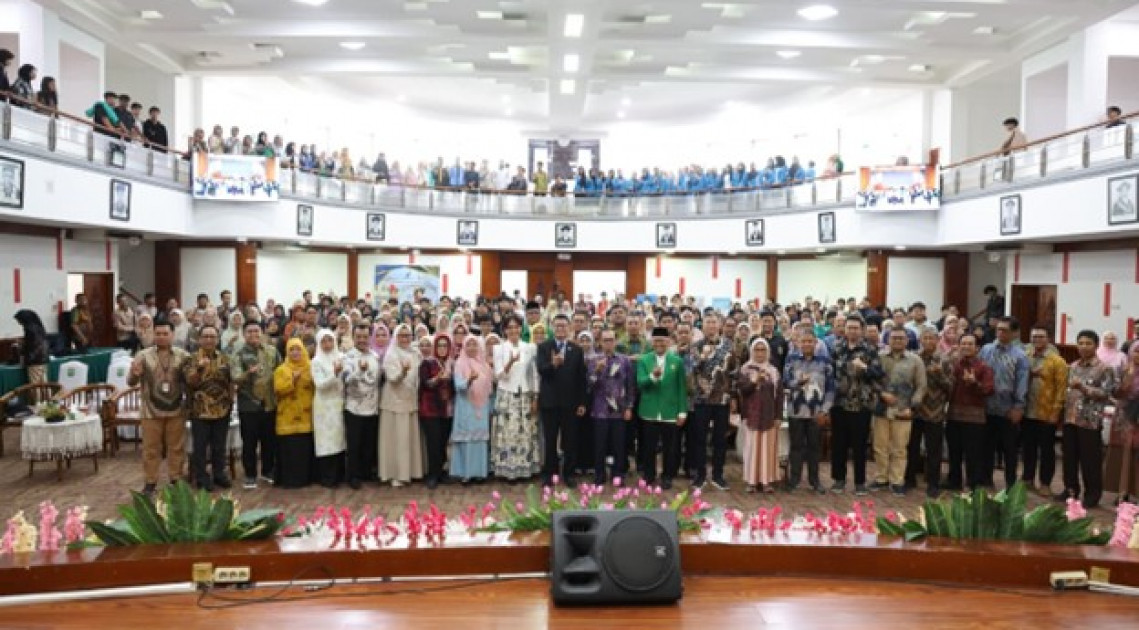
The message was delivered during an
inspirational lecture, or Kulinspirasi, attended by hundreds of UNAND
students as well as students from several higher education institutions in West
Sumatra, including Universitas Negeri Padang, Politeknik Negeri Padang,
Universitas Bung Hatta, Universitas Baiturrahmah, Universitas Muhammadiyah
Sumatra Barat, Universitas Dharma Andalas, Universitas Ekasakti, Universitas
Perintis Indonesia, and Sekolah Tinggi Ilmu Farmasi.
The activity was also attended by
UNAND Rector Efa Yonnedi, Vice Rector I Syukri Arief, Vice Rector III Hefrizal
Handra, Vice Rector IV Henmaidi, and other members of the UNAND academic
community. BPOM RI was represented by several officials, including the
Chairperson of Dharma Wanita Persatuan BPOM, Elfi Taruna Ikrar; Deputy for
Drug, Narcotics, Psychotropic, Precursor, and Addictive Substance Control,
William Adi Teja; and Head of BBPOM in Padang, Martin Suhendri.
In his presentation, Prof. Taruna
Ikrar explained that a world-class university is not only defined by
international rankings. More importantly, it is measured by excellence in
education, research, and real contributions to society. He emphasized that the
concept should become a framework for building higher education institutions
that are excellent, relevant, competitive, and capable of producing sustainable
impact for science, industry, and global development.
He also underlined that becoming a
world-class university requires strong governance, science-based research, cross-sector
collaboration, and the ability to transform innovation and creativity into
solutions that benefit national and global development. According to him,
universities can help local Indonesian products gain global competitiveness
when they are managed with proper quality, innovation, and standards.
Prof. Taruna used rendang as an
example of a local Indonesian product with global potential. He noted that
rendang was recognized as the best coconut-based dish in the world in the 2025
TasteAtlas Awards list of the 100 best-rated dishes with coconut. This
achievement, he said, shows that local products can compete internationally
when supported by quality, safety, and compliance with global regulations.
The Head of BPOM RI also stressed
that innovation born from universities must create real-world impact. Students,
he said, are key actors in innovation and entrepreneurship. Research should not
stop at scientific publications, but should move toward practical solutions
that can be felt by society. In the right ecosystem, campuses can produce
innovators, founders, and problem solvers who turn ideas into trusted
innovations.
BPOM RI also opened opportunities
for strategic collaboration with UNAND to create broader impact. The potential
cooperation includes curriculum development and review to align learning with
regulatory needs, scientific advancement, and global challenges in food and
health. Collaboration may also include training, dissemination activities,
workshops, seminars, and competency development programs for students,
lecturers, and related stakeholders.
This initiative supports SDG 4
Quality Education by encouraging UNAND to strengthen its academic quality,
research relevance, student capacity, and global competitiveness. Through the
world-class university agenda, students are encouraged to become innovators and
entrepreneurs who can transform knowledge into solutions for society.
The activity also aligns with SDG
9 Industry, Innovation and Infrastructure because it promotes science-based
innovation, product standardization, research commercialization, and stronger
links between campus, industry, and regulators. By connecting research,
entrepreneurship, quality standards, and global market readiness, UNAND and
BPOM RI contribute to building a stronger innovation ecosystem.
Through this inspirational lecture,
BPOM RI reaffirmed its support for UNAND’s transformation toward a more
impactful and globally recognized university. The agenda highlights the
importance of moving campus research beyond publication toward innovation,
entrepreneurship, and solutions that strengthen Indonesia’s contribution to the
world.