
AIPKI Congress 2025 in Padang Highlights Universitas Andalas’ Role in Transforming Medical Education in Support of SDG 3 and SDG 4
Padang, 28 June 2025
 The Faculty of Medicine of Universitas Andalas
was entrusted to host the 2025 Congress of the Association of Indonesian
Medical Education Institutions (AIPKI), held from June 27 to 29, 2025, at ZHM
Premiere Hotel Padang, West Sumatra. This national forum brought together
stakeholders in medical education from across Indonesia to discuss new
directions for strengthening medical education in the country, while also
reaffirming Universitas Andalas’ role in the strategic national agenda of
increasing the number and quality of medical professionals.
The Faculty of Medicine of Universitas Andalas
was entrusted to host the 2025 Congress of the Association of Indonesian
Medical Education Institutions (AIPKI), held from June 27 to 29, 2025, at ZHM
Premiere Hotel Padang, West Sumatra. This national forum brought together
stakeholders in medical education from across Indonesia to discuss new
directions for strengthening medical education in the country, while also
reaffirming Universitas Andalas’ role in the strategic national agenda of
increasing the number and quality of medical professionals.The congress was officially opened by the
Director General of Higher Education, Science, and Technology of the Ministry
of Higher Education, Science, and Technology, Prof. Khairul Munadi, accompanied
by the Governor of West Sumatra, Mahyeldi Ansharullah. During the forum, which
was reported on June 27, 2025, the government reaffirmed its commitment to
strengthening both access to and quality of medical education, including
through the establishment of new medical schools, nursing academies, and
specialist programs as part of the effort to reinforce the national healthcare
system.
In terms of participation, the congress was a
major national-scale event. Universitas Andalas recorded the attendance of 298
delegates from 115 medical education institutions across Indonesia, along with
11 institutional exhibition booths and 5 local MSMEs. The series of activities
included keynote speeches, panel discussions, organizational meetings, the
election of the AIPKI Chair for the 2026–2028 period, and a visit to the
Universitas Andalas Limau Manis Campus. The involvement of academic
institutions, government representatives, hospitals, and local stakeholders
demonstrated that the development of medical education is now seen as a shared
agenda requiring cross-sector collaboration.
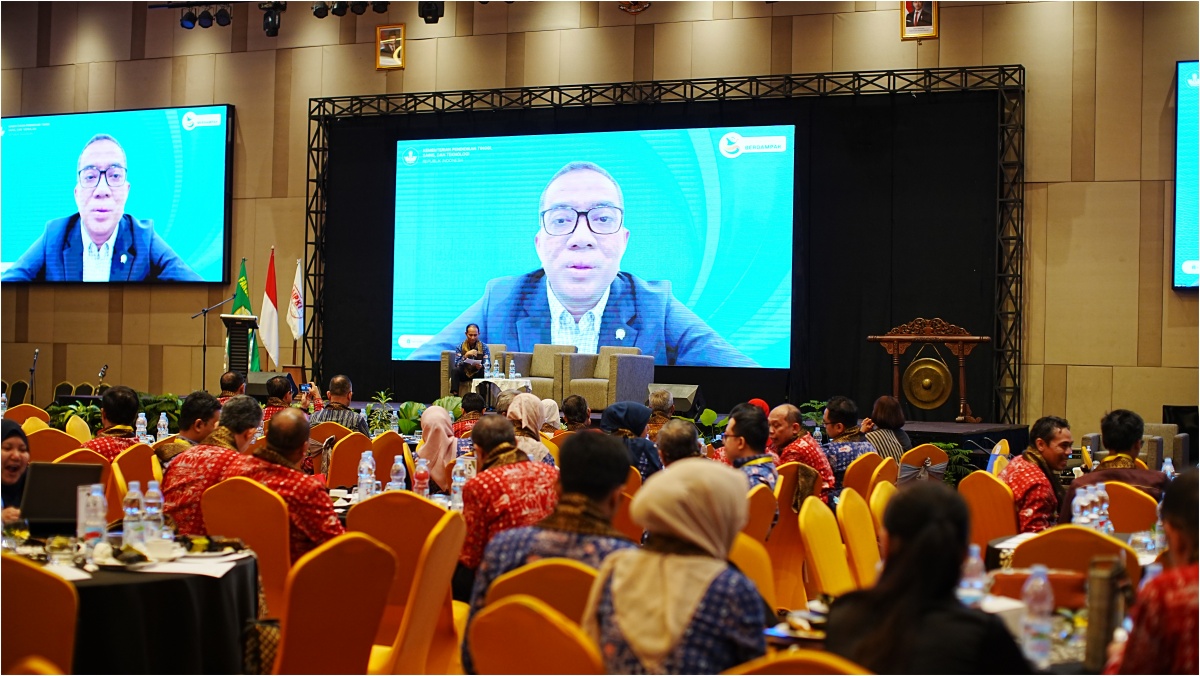
In his remarks delivered online, Indonesia’s
Minister of Higher Education, Science, and Technology, Prof. Brian Yuliarto,
emphasized the President’s directive on the urgent need to accelerate the
increase in the number of medical professionals in Indonesia. As a follow-up,
the ministry is expected to establish a task force for accelerating medical
education in order to formulate strategic policies related to increasing both
the number and equitable distribution of doctors, including specialists.
According to the study presented during the forum, Indonesia has the potential
to open up to 165 specialist study programs between 2025 and 2028, with a
capacity of more than 4,300 specialist medical residency students.
At the same time, the forum stressed that the increase
in the number of medical institutions and graduates must be accompanied by
serious attention to quality. Chairman of the Central Executive Board of AIPKI,
Prof. Budi Santoso, revealed that Indonesia currently has 127 public and
private medical faculties, a sharp increase from 76 in 2022. Therefore, quality
control, the maintenance of educational standards, and cost management remain
priorities to ensure that access to becoming a doctor can be more widely
enjoyed by the public.
Universitas Andalas Rector, Efa Yonnedi,
reaffirmed the university’s commitment through its Faculty of Medicine to
continue strengthening the national health system through the development of
teaching hospital networks, translational research, increased scientific
publications, and accelerated international accreditation. Meanwhile, the Dean
of the Faculty of Medicine, dr. Sukri Rahman, stated that the opportunity to
serve as host represented an important momentum to help shape a new direction
for national medical education. This reflects that Universitas Andalas’ role
extends beyond organizing the event and includes a concrete contribution to
strengthening Indonesia’s medical education ecosystem.
This event is particularly relevant to SDG 3
(Good Health and Well-being), as the congress focused on increasing the number
of doctors, strengthening health services, and ensuring a more equitable
distribution of medical personnel for the public. It is also closely linked to
SDG 4 (Quality Education), since the forum placed the transformation of medical
education, curriculum quality, institutional governance, and graduate quality
at the center of the national agenda being advanced collectively.